










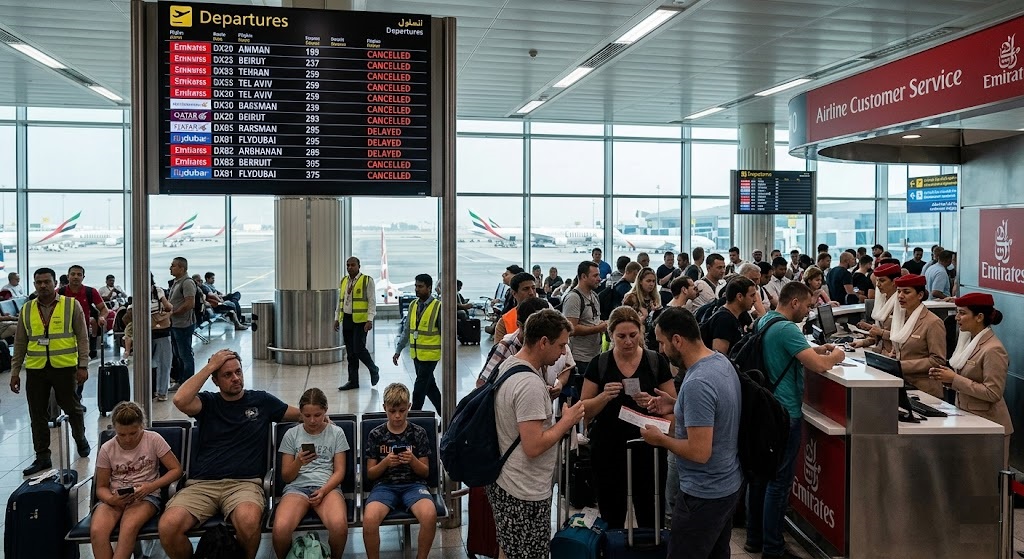
The Middle East’s booming tourism engine has slammed into a brutal slowdown as the 2026 Iran‑linked conflict slashes air links, triggers security warnings, and scares off international travelers by the millions. Forecasters now expect the region to lose $34–56 billion in visitor spending in 2026—roughly a quarter of its projected inbound revenue—compared with pre‑war projections, with the WTTC and Tourism Economics estimating 23–38 million fewer international visitors than previously expected.
Gulf Cooperation Council (GCC) heavyweights such as the UAE, Saudi Arabia, Qatar, and Bahrain are hardest hit, as their growth‑at‑all‑costs tourism models rely heavily on air connectivity, safety perception, and large‑scale events. Massive airspace closures and flight cancellations around Dubai, Abu Dhabi, Doha, and others have turned hub‑centric itineraries into risky detours, while U.S. and UK “no‑go” advisories push cancellations in luxury hotels, cruise calls, and event‑driven travel. Even countries less dependent on aviation, such as those with strong land‑border arrivals, still face slower growth as regional sentiment darkens and insurance and travel‑warning costs rise.
The shock goes beyond headline numbers: planned expansions in museums, theme parks, and mega‑events now face delayed returns, while airlines and tour operators scramble to reroute traffic through Europe or Asia. The Middle East’s role as a global transit corridor—handling about 14% of world international transit traffic—means the ripple hits long‑haul routes to South Asia, Africa, and beyond. If the conflict eases, the region may recover in fits and starts, but the 2026 season is already being written as a lost year for many operators, with billions of dollars in potential revenue evaporating in a matter of weeks.
Key Points
- Middle East tourism is projected to lose $34–56 billion in spending in 2026 due to the Iran‑linked conflict.
- Arrivals could fall 23–38 million below pre‑war forecasts, with the GCC (UAE, Saudi, Qatar, Bahrain) hit hardest.
- Airspace closures, “no‑go” advisories, and flight disruptions have sharply weakened traveler confidence.
Bottom Line: The 2026 Iran‑war shock is stripping roughly a quarter of the Middle East’s projected tourism revenue, turning a growth‑at‑all‑costs story into a sudden crisis that threatens years of investment in luxury mega‑projects, aviation hubs, and regional connectivity.


More Stories
Flights Cancelled Across Europe As Rome, Catania And More Face Disruption
FAA Fines Unruly Airline Passengers $1.5 Million in 2026
Asia Travel Disrupted by 3,657 Delays