










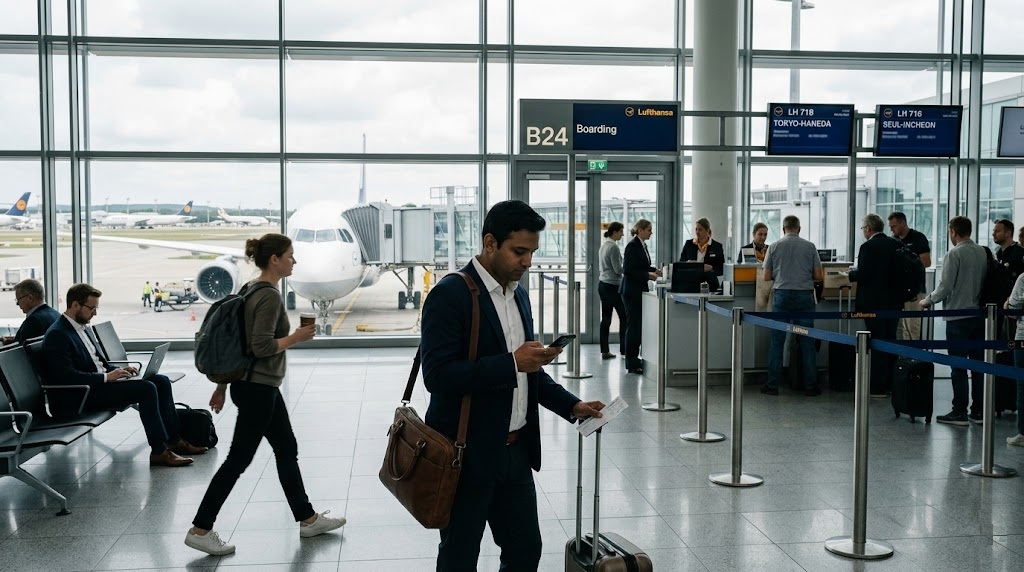
Lufthansa Group CEO Christoph Mueller has warned that Europe’s heavy reliance on Gulf‑hub carriers such as Emirates, Qatar Airways, and Etihad is a growing “Achilles heel” for the continent’s connectivity, citing the risk of disruption if tensions or geopolitical shocks curtail traffic through Dubai, Doha, and Abu Dhabi. The CEO argues that many European destinations depend on these hubs to feed long‑haul routes to Asia, Africa, and the Americas, and that excessive dependence leaves European airlines and travelers vulnerable if airspace closes, capacity is cut, or political disputes spill over into aviation agreements. He also stresses that this over‑reliance can distort competition, with Gulf hubs capturing a disproportionate share of the most profitable long‑haul traffic while European networks remain fragmentary.
Mueller’s comments come amid heightened Middle East tensions, rising fuel costs, and growing scrutiny of how Gulf‑carrier dominance affects competition, noise, and emissions around major European airports. The Lufthansa Group has been pushing for a stronger pan‑European network strategy, including expanded long‑haul and regional connections via Frankfurt, Munich, and Zurich, to reduce the need for passengers to route through Middle Eastern hubs. The message is clear: Europe must invest more in its own hub‑and‑spoke infrastructure and regulatory coordination so that disruptions elsewhere do not derail its global‑travel links and the region can retain more of the associated economic value.
For the broader industry, the CEO’s warning underscores a strategic pivot from “hub‑dependence” to “hub‑diversity,” with several European carriers now recalibrating network plans, increasing point‑to‑point routes, and lobbying for more balanced traffic‑rights frameworks with Gulf states. If European hubs can capture more of the long‑haul traffic themselves, the region would gain greater resilience, more equitable revenue distribution, and tighter control over sustainability and consumer‑protection standards. Over time, this shift could reshape the balance of power in global aviation, reducing the Middle East’s dominance on key intercontinental corridors while giving European carriers a stronger hand in shaping route economics and service quality.
Key Points
-
Lufthansa Group CEO warns that Europe’s reliance on Gulf hubs is a strategic vulnerability amid geopolitical risks.
-
European connectivity to Asia, Africa, and the Americas often depends on Dubai, Doha, and Abu Dhabi, leaving routes exposed if these hubs are disrupted.
-
The CEO is pushing for stronger European hub networks and more diversified traffic flows to reduce dependence on Middle Eastern carriers.
Bottom Line: Mueller’s “Achilles heel” remark frames Gulf‑hub dependence as a structural risk, urging European airlines and policymakers to build more self‑reliant, diversified long‑haul networks that can withstand regional shocks without collapsing global‑travel access.



More Stories
HVS: U.S. Hotel RevPAR Up Over 10% Mid-September as Nearly 1,000 Hotels Sold in H1 2026
Hyatt’s Luxury Push Across the Americas Centers on Mexico Park Hyatt Trio and Unbound Growth
Belgians Could Get Faster US Airport Entry By End Of 2026