






Air France’s Travel Weekly “Thought Leadership” piece on sustainable tourism frames the airline as a bridge between the traveler’s desire for meaningful trips and the sector’s urgent need to decarbonize. The airline positions itself not only as a mobility provider but as a steward of more responsible travel, with a structured program—its ACT environmental strategy—aimed at aligning growth with a 1.5°C‑compatible trajectory.
Core environmental strategy
At the heart of the argument is Air France’s ACT program, which targets a 30% reduction in CO₂ emissions per passenger‑kilometer by 2030 versus 2019, across three pillars: reducing direct emissions from flights, indirect emissions from ground operations and supply chains, and supporting carbon‑removal projects. The airline is pursuing this through fleet‑renewal (new‑generation, 20–25%‑more‑efficient aircraft), eco‑piloting techniques, and a multi‑year push to scale up sustainable aviation fuel (SAF), aiming for 10% SAF by 2030 and 63% by 2050. SAF, produced from non‑fossil feedstocks such as used cooking oil or agricultural waste, can cut life‑cycle CO₂ by up to 75–80% compared with conventional kerosene, and the Air France–KLM Group already ranks among the world’s top SAF users.
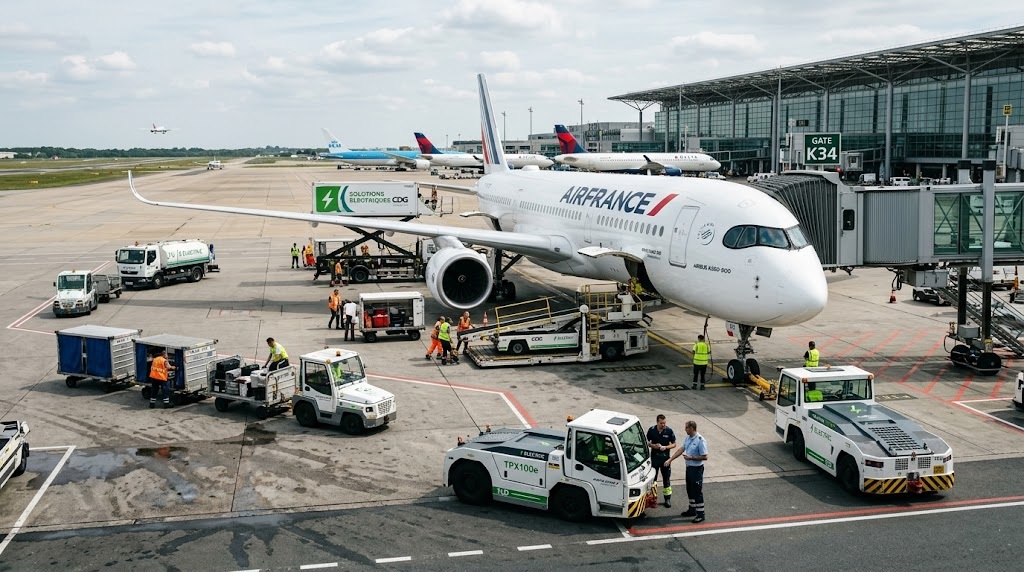
Beyond fuels, Air France highlights operational efficiencies such as lighter cabin materials, electric‑ramp vehicles, and single‑engine taxiing, as well as a strong waste‑reduction drive that has cut single‑use plastics by about 90% since 2018 and targets a 50% reduction in non‑recycled waste by 2030 versus 2011 levels. On‑board, the narrative extends to local, seasonal catering, pre‑selected meals to reduce food waste, and broader partnerships with conservation and renewable‑energy projects in Brazil, Martinique, and India, through its collaboration with climate‑advisory firm EcoAct.
Making sustainability a passenger‑facing product
The Travel Weekly thought‑leadership angle underscores how Air France is turning environmental commitments into tangible guest choices, rather than abstract CSR targets. Passengers can contribute to reforestation or SAF‑development funds at the point of sale, with Air France matching certain contributions during flagship events such as the Paris 2024 Olympics, effectively doubling the impact of individual donations. The airline also frames “responsible travel” as a co‑creation: it supplies tools, transparency, and infrastructure, while travelers are encouraged to rethink trip frequency, routing, and even cabin‑choice behavior in line with a cleaner footprint.
For corporate and MICE clients, Air France positions sustainable‑travel policies as a strategic lever—helping companies set carbon‑reduction targets, adjust travel‑mix (e.g., virtual options, longer but fewer trips), and select greener routes while still delivering commercial outcomes. By embedding sustainability into product design, policy guidance, and marketing, the airline is attempting to normalize low‑carbon travel as a default, not a niche, within France’s tourism‑centric economy.
Tourism‑sector implications
From a tourism‑development perspective, the essay suggests that sustainable aviation is a prerequisite for long‑term destination growth, especially in markets highly dependent on inbound flyers like France. Rather than seeing climate targets as a constraint on flows, Air France and the French tourism authorities are treating them as a catalyst for higher‑value, longer‑staying, and more experience‑driven trips, where visitors choose France not just for its heritage and gastronomy but also for its environmental stewardship.
Key Points
- Air France’s sustainable‑tourism thought leadership centers on its ACT program, targeting a 30% CO₂ reduction per passenger‑km by 2030 versus 2019 through fleet renewal, eco‑piloting, and SAF expansion.
- The airline aims to ramp up sustainable aviation fuel to 10% by 2030 and 63% by 2050, supported by test flights and matching‑donation schemes for SAF and reforestation.
- It is cutting on‑board and airport waste (e.g., 90% fewer single‑use plastics), sourcing more local‑seasonal food, and funding biodiversity and renewable projects via EcoAct.
- Thought‑leadership messaging emphasizes that sustainability is a shared project, with passengers and corporates given tools and incentives to travel more responsibly without sacrificing access to global destinations.
Bottom Line: Air France’s Travel Weekly piece argues that sustainable tourism depends on airlines acting as systemic enablers rather than just technical operators, aligning decarbonization, product innovation, and policy‑shaping to keep international travel compatible with climate goals while still serving France’s tourism‑led economy.



More Stories
Europe Flight Disruptions Hit Madrid and Other Routes
Emirates, Air Arabia and Riyadh Air Transform Gulf Travel in 2026
Malta Steps Up Overtourism Crackdown Amid Resident Protests