








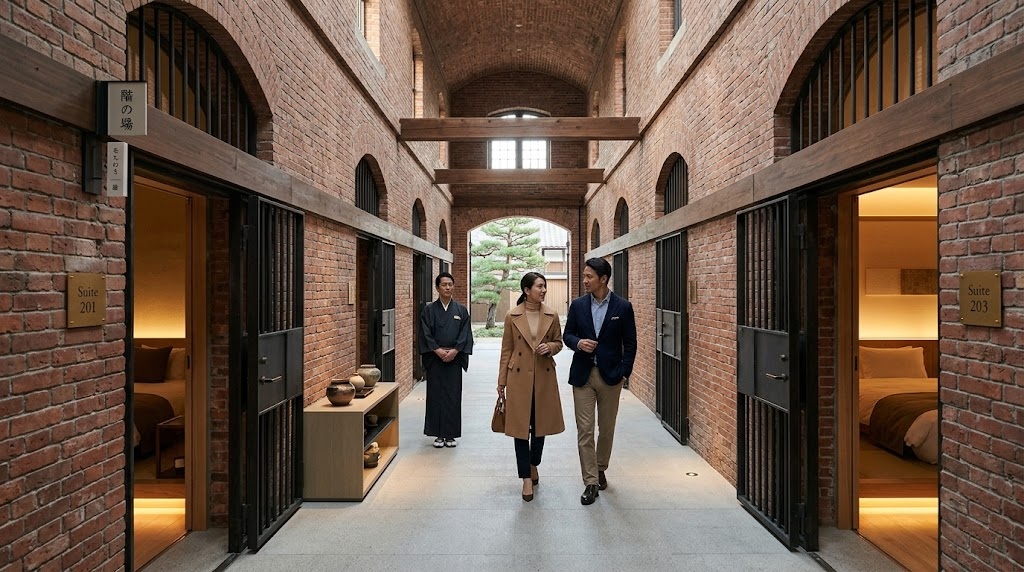
Japan is turning a dark chapter into a bold new luxury story with the transformation of a former prison into a high‑end resort, blending history, architecture, and comfort into a one‑of‑a‑kind travel experience. The project repurposes a defunct correctional facility—complete with its original cell blocks, guard towers, and perimeter walls—into an immersive, design‑driven retreat that invites guests to explore the site’s past while enjoying spa treatments, curated dining, and secluded accommodations. The conversion preserves key structural elements such as original iron bars, corridors, and institutional signage, re‑interpreting them as stylized design features rather than grim relics, giving visitors both an aesthetic and emotional narrative about transformation and rehabilitation.
The new resort caters to the growing “dark tourism” and experiential‑travel market, where travelers seek destinations with layered histories, but delivers them in a context of luxury and wellness. Rooms and suites are carved out of converted dormitories and administrative wings, with modern amenities layered over the original fabric, while communal spaces such as lounges, restaurants, and event halls occupy what were once courtyards and exercise yards. Wellness facilities, including hot springs, saunas, and bespoke treatment programs, are integrated into the master plan, allowing guests to disconnect from urban stress within a setting that simultaneously feels both solemn and rejuvenating.
Beyond the physical transformation, the project is framed as a conversation piece about Japan’s evolving attitude toward heritage, reuse, and tourism innovation. The resort’s programming includes curated tours, exhibitions, and guided storytelling that contextualize the building’s penal history, often in collaboration with local historians, artists, and former staff, turning the property into a cultural destination rather than just a place to sleep. For international visitors, the former‑prison‑turned‑resort offers a provocative, immersive angle on Japan’s wider landscape of heritage‑driven luxury, from ryokan‑turned‑boutique hotels to temples and castles reborn as experience‑centric stays.
Key Points
-
A former Japanese prison has been converted into a luxury resort, merging penal‑era architecture with high‑end hospitality.
-
The design preserves original features such as cell blocks and perimeter walls, re‑imagined as aesthetic and symbolic elements.
-
The resort blends “dark tourism” appeal with wellness, spa experiences, and curated cultural programming.
Bottom Line: Japan’s new prison‑to‑resort venture challenges conventions by turning confinement into comfort, using heritage‑driven design and experiential storytelling to position the former‑penal site as a provocative, luxury‑grade chapter in the country’s evolving tourism narrative.



More Stories
Taiwan’s Iconic Grand Hotel Taipei Hit by Cyberattack: Data Breach Alert!
1 Hotel Tokyo Debuts as Brand’s Asia Launch: Nature-Meets-Luxury in Akasaka!
Waldorf Astoria NYC Up for Grabs Chinese Owners Eye $2B+ Sale Post-Renovation!