









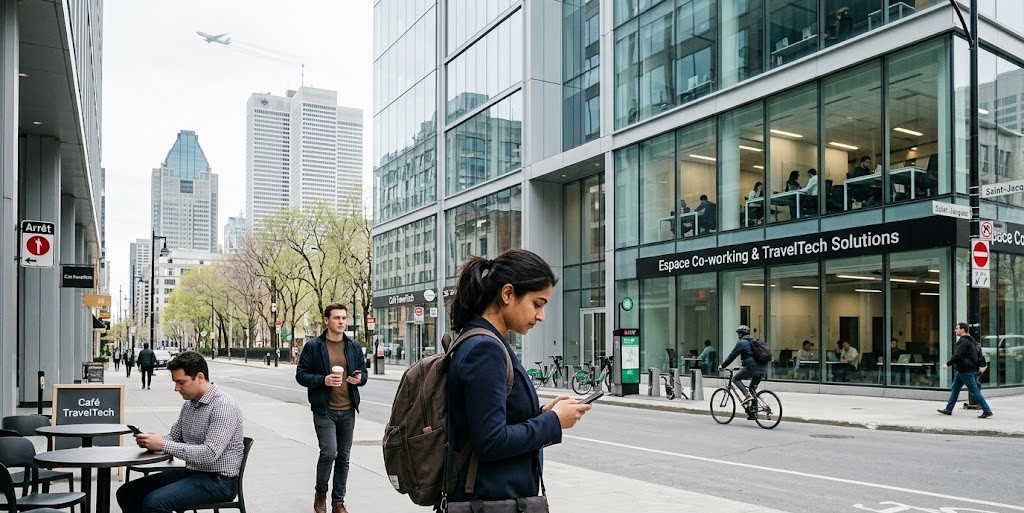
Montreal has quietly risen to become the world’s second‑most important travel tech hub, trailing only San Francisco in the global ecosystem, as a dense cluster of AI‑driven startups, established tech companies, and research centers converges around the city’s tourism and mobility industries. The city’s rise is rooted in a strong academic and government‑backed AI ecosystem, including institutions such as MILA and the Montreal Institute for Learning Algorithms, which have trained thousands of machine‑learning specialists now feeding into travel‑tech ventures focused on pricing, personalization, distribution, and dynamic operations. This deep talent pool, combined with relatively low operating costs and a supportive policy environment, has made Montreal an attractive base for both local founders and global travel‑tech investors.
The city is now home to a growing roster of companies that touch nearly every layer of the travel stack, from distribution platforms and metasearch tools to AI‑driven revenue‑management systems, customer‑service automation, and data‑driven marketplace models. Many of these startups are deliberately positioned as “quiet” innovators, focusing on B2B infrastructure and backend tools rather than flashy consumer brands, which is why Montreal’s global influence in travel tech has grown under the radar while still shaping how airlines, hotels, OTAs, and tour operators make decisions. The concentration of companies working on AI‑driven personalization, frictionless booking, and real‑time revenue optimization is turning Montreal into a de facto R&D center for the global travel industry.
Beyond startups, larger players and corporate travel‑tech arms have also set up innovation labs and regional hubs in Montreal, drawn by the same combination of AI talent, multilingual workforces, and proximity to North American and European markets. The city’s bilingual culture and strong ties to both Canada and France add a unique advantage for companies building cross‑border travel products, while local universities and incubators systematically feed graduates into the travel‑tech pipeline. As AI and automation reshape pricing, customer‑service, and distribution, Montreal’s quiet consolidation as a second‑tier global travel‑tech powerhouse is giving it outsized influence over how the industry operates in the age of intelligent algorithms.
Key Points
- Montreal is now widely seen as the world’s second‑most important travel‑tech hub after San Francisco, fuelled by a strong AI and research ecosystem.
- The city hosts a dense cluster of startups and established companies working on AI‑driven pricing, personalization, distribution, and operations tools.
- Factors such as low operating costs, supportive policies, bilingual talent, and proximity to major markets have helped Montreal grow its influence quietly but deeply.
Bottom Line: Montreal’s understated ascent to travel‑tech prominence reflects how a city can become a global powerhouse not through branding alone but through a steady, talent‑driven build‑out of AI‑first infrastructure that now quietly underpins much of the travel industry’s digital backbone.




More Stories
Caesars Palace Unveils Opulent Presidential Villas & Sky Villas in Vegas.
COMO Metropolitan Singapore Masters Sleep: Asia’s First Hotel-Wide SleepHub Debut!
From Prison Bars to Luxury Stars: HOSHINOYA Transforms Nara’s Historic Jail into 2026 Resort!