









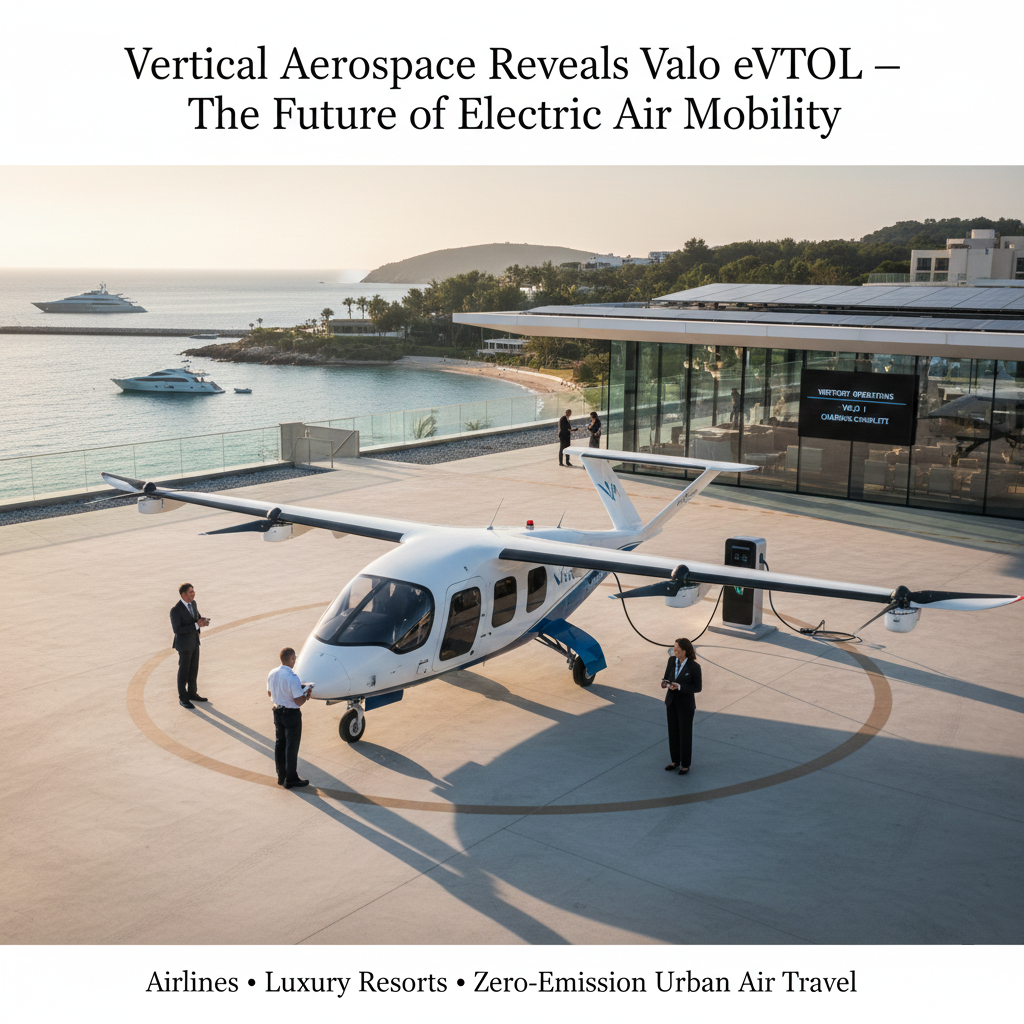
Vertical Aerospace unveiled its redesigned Valo eVTOL aircraft on December 10, 2025, marking a pivotal advancement in electric aviation for urban air mobility. The sleek successor to the VX4 prototype features an aerodynamic airframe, under-floor battery packs for ~12-minute recharges, eight electric motors with full redundancy, and upgraded propellers, targeting EASA/UK CAA certification by 2028. Capable of 100-mile range at 150 mph with zero emissions and quiet operation (<50 dBA), Valo launches with a premium four-seat cabin (expandable to six) offering panoramic windows, privacy dividers, and space for 12 bags, supporting passenger, EMS, cargo, and future autonomous variants.
Major airlines including American Airlines, Japan Airlines, Bristow, British Airways, Emirates, and Air France are partnering or exploring Valo integration for airport-to-city shuttles, slashing commute times in congested hubs like London. Luxury resorts in places like the Maldives or Swiss Alps eye eVTOL transfers for seamless, eco-luxury access, enhancing guest experiences with direct, quiet flights bypassing traffic.
Vertical plans seven UK-built certification aircraft for testing, aiming for 175 units/year production by 2030. CEO Stuart Simpson calls Valo a “commercial reality” for clean, fast transport, reshaping short-haul tourism and regional connectivity.
Key Points:
-
Valo specs: 100 miles/150 mph, 4-6 seats, zero emissions, 2028 certification target.
-
Airlines (AA, JAL, BA, Emirates) and resorts partner for urban shuttles.
-
Features redundancy, quick recharge, premium cabin with luggage space.
-
Boosts tourism via faster access to remote luxury spots.
-
Production ramps to 175/year by 2030




More Stories
COMO Metropolitan Singapore Masters Sleep: Asia’s First Hotel-Wide SleepHub Debut!
Taiwan’s Iconic Grand Hotel Taipei Hit by Cyberattack: Data Breach Alert!
Malta Pioneers Inclusive Tourism Mediterranean Forum Sets New Global Standards!