











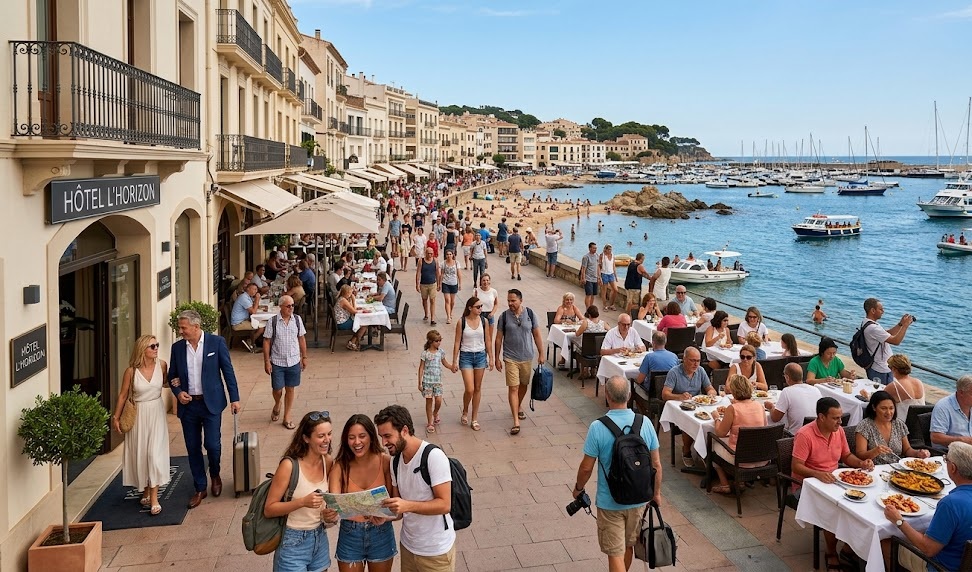
Europe is strengthening its position as the world’s leading leisure travel region, with France, Spain, Italy and Türkiye driving strong demand as millions of travelers head across the continent during the 2026 summer season. New tourism data shows that Europe captured around $2 trillion in leisure travel spending in 2025, equal to roughly one-third of global leisure travel expenditure.
The momentum is continuing into 2026, supported by strong travel intentions, extensive air connectivity, established tourism infrastructure and the enduring appeal of Mediterranean and European destinations. France is leading the major markets in leisure-spending growth, while Spain and Italy continue attracting large volumes of international visitors with their beaches, culture, food and historic cities.
France Maintains Its Leadership
France remains one of Europe’s strongest tourism performers, combining globally recognized destinations such as Paris, the French Riviera, the Alps, Provence and the Atlantic coast with a highly developed hospitality and transport network.
Leisure spending in France increased by 3.6% in 2025, ahead of Spain at 2.6% and Italy at 2.2%. This performance highlights the country’s ability to attract both international visitors and high-value leisure travelers seeking cultural, culinary, luxury and outdoor experiences.
Spain Continues to Draw Record Demand
Spain remains one of Europe’s most powerful summer tourism markets, benefiting from its Mediterranean coastline, islands, major cities and year-round travel appeal. Airports across the country are experiencing strong passenger demand, with Spain’s major gateways handling significant increases in traffic during the first half of 2026.
Spain’s airport network handled 156.2 million passengers during the first half of 2026, prompting airport operator Aena to raise its full-year passenger-growth forecast. Strong tourism demand has helped make Spain one of the key beneficiaries of Europe’s current travel boom.
Italy and Türkiye Add to the Mediterranean Surge
Italy and Türkiye are also playing major roles in Europe’s leisure tourism performance. Italy continues to attract travelers through its combination of historic cities, cuisine, coastlines, islands and cultural attractions, while Türkiye offers a mix of Mediterranean resorts, history, shopping and value-driven travel.
The strength of these destinations demonstrates that Europe’s tourism growth is not concentrated in a single country. Instead, travelers are spreading demand across multiple destinations while choosing locations based on value, accessibility, experiences and climate.
Travelers Are Becoming More Selective
Despite record-high travel intentions, European travelers are also becoming more careful about how they spend. The European Travel Commission found that 82% of Europeans planned to travel between April and September 2026, the highest level recorded since 2020.
However, travelers are increasingly choosing shorter stays and more moderate budgets, with value for money becoming a stronger consideration. This means destinations must compete not only for visitor numbers but also for traveler spending and repeat visits.
Heat Is Beginning to Reshape Summer Travel
Extreme summer temperatures are also influencing travel patterns across Europe. While Southern Europe continues to attract enormous demand, intense heatwaves and wildfires are encouraging some travelers to consider northern and cooler destinations, particularly during the peak summer months.
This could gradually reshape Europe’s tourism calendar, with more visitors choosing spring and autumn travel or shifting toward cooler coastal and northern regions. The trend creates opportunities for destinations that can offer comfortable weather, outdoor experiences and strong infrastructure outside the traditional summer hotspots.
Europe’s Tourism Economy Remains Strong
The strength of leisure travel is providing major economic benefits to airlines, hotels, restaurants, attractions, airports and local communities across the continent. With global leisure spending reaching $6.15 trillion in 2025, Europe’s $2 trillion share demonstrates the enormous scale of its tourism economy.
Europe’s growth is also expected to continue, with the region forecast to expand by 3.7% in 2026, compared with global travel growth of 3.1%. This suggests that Europe’s tourism advantage is not simply seasonal but reflects its broader ability to attract international and intra-European travelers.
Key Takeaways
- Europe captured around $2 trillion in global leisure travel spending in 2025, representing roughly one-third of worldwide leisure expenditure.
- France led major European destinations in leisure-spending growth, rising 3.6% compared with 2.6% for Spain and 2.2% for Italy.
- Spain continues experiencing exceptionally strong summer demand, with airports handling 156.2 million passengers during the first half of 2026.
- Italy and Türkiye remain major Mediterranean tourism powerhouses, benefiting from strong international demand and diverse leisure offerings.
- 82% of Europeans planned to travel during the 2026 spring and summer season, the highest level recorded since 2020.
- Travelers are increasingly prioritizing value, shorter stays, accessibility and distinctive experiences when choosing destinations.
- Extreme heat and wildfires are beginning to influence travel patterns, creating additional opportunities for cooler destinations and shoulder-season tourism.
Bottom Line
Europe is reinforcing its dominance of the global leisure travel market in 2026, with France, Spain, Italy and Türkiye leading a powerful wave of tourism demand. France’s strong spending growth, Spain’s record airport traffic and Europe’s exceptionally high travel intentions demonstrate the strength of the region’s tourism economy. However, changing budgets, extreme summer heat and evolving traveler preferences mean destinations will need to compete increasingly through value, accessibility, comfort and memorable experiences rather than relying on traditional summer demand alone.




More Stories
Australia Tourists Go Missing in Nepal Travel Nightmare Overtaken by Himalayan Floods
California Joins Michigan And Border Tourism Economies As US And Canada Tensions Trigger Nearly 35% Hospitality Fallout
Greece Suffers Economic Collapse As Fragile Island Communities Buckle Under Exhausting Summer Travel