








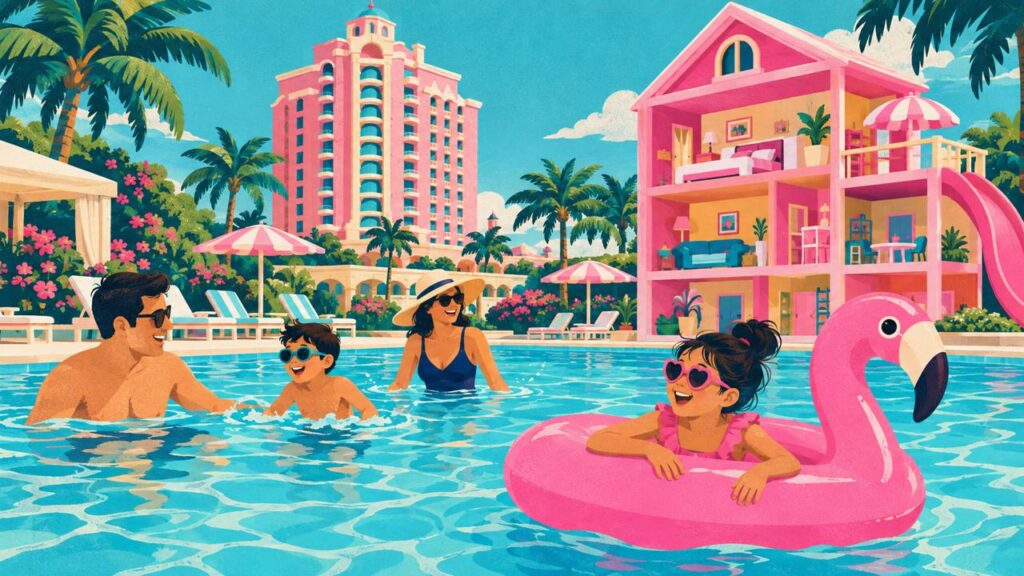
VAI Resort in Glendale, Arizona, is expanding its Mattel City concept with a Barbie Hotel and a second Mattel-themed hotel. Together the two add more than 800 rooms to the entertainment destination.
Entertainment destinations now build their own room supply
The sequence matters. First comes the attraction. Then comes the lodging that keeps the guest on property for longer. By adding more than 800 rooms, the destination is no longer a day trip with nearby hotels. It is a full stay.
Why branded intellectual property helps
A well-known toy and entertainment brand gives the hotels instant recognition. Families and fans do not need to be convinced. The challenge is the opposite: keeping the experience believable and well run, so that guests do not feel the theme is a coat of paint.
What it means for demand
Themed hotels work best when they target a clear group: families with young children, fans and gift travelers. Those guests book earlier, stay for more than one night and spend inside the property. They are also less sensitive to a small rate difference than a business traveler comparing two similar hotels.
What other operators can take from it
- Pick a guest and design for them. A hotel that is for everyone gets compared on price. A hotel for one audience competes on fit.
- Think beyond the room. Food, retail, events and photo moments produce revenue that the room rate alone does not.
- Test before you scale. Themed concepts are easier to grow once a first property proves repeat demand.
Whether this is a lasting trend or a niche will depend on how well the first guests rate the stay. The early reviews will tell more than the announcement.
Building a destination, room by room
The expansion shows how a destination can grow in stages. The first stage is the attraction, which proves that people will travel for it. The second is lodging, which captures the overnight spend. The third is everything around it: food, retail, events and services. Each stage depends on the one before. A resort that adds 800 rooms is betting that the attraction has enough pull to fill them across the year, not just on peak weekends.
The operational challenge of a themed tower
Themed hotels need more than decoration. Operators have to maintain the look to a high standard, because guests photograph everything and compare it with the brand image. Wear and tear on themed finishes costs more to repair than standard ones. Staff need to be trained to deliver the experience in a consistent way. Maintenance planning, supplier relationships and inventory of custom items all need to be built in from the start.
Who the guest is
The main guest is a family with young children, plus fans who travel for the brand. This guest books further ahead, is likely to stay more than one night and is willing to pay for convenience. They also have specific needs: connecting rooms, cribs, flexible dining, easy access to the attraction. Operators who anticipate these needs can raise satisfaction and earn better reviews.
Seasonality and weather
Arizona is a market with strong seasonal patterns. Resorts there plan for a busy winter and spring, and a hotter summer. A themed indoor and pool-led experience can help in the heat, but operators will still need smart rate strategy, local residents’ offers and group business to smooth the year.
Lessons for other hotels
- Define a signature. A hotel does not need a famous license to stand for something. A clear identity in one area, such as family, wellness or music, gives guests a reason to pick you.
- Create content moments. Spaces that guests want to photograph bring free marketing.
- Package the experience. Bundled offers that combine room, food and activity raise the average spend and are easier to sell than a plain room rate.
- Listen early. Read the first reviews closely and fix recurring complaints quickly. In themed hotels, small failures damage the promise.
The risk of dependence on one brand
A hotel built around a single licensed brand is tied to that brand’s appeal. If tastes shift, the property has to adapt. Contracts that allow for refreshes and updates, and designs that can be refreshed without a rebuild, reduce that risk. Owners of themed hotels should plan for periodic renewal from the start.


More Stories
Accor and Hard Rock International Sign a Global Strategic Partnership
Sports Illustrated Resorts Opens in Nashville: A Sports-Themed Hotel Brand Goes National
Dazzler Select Passes 12 Open Hotels in Its First Year: The Soft-Brand Appeal