










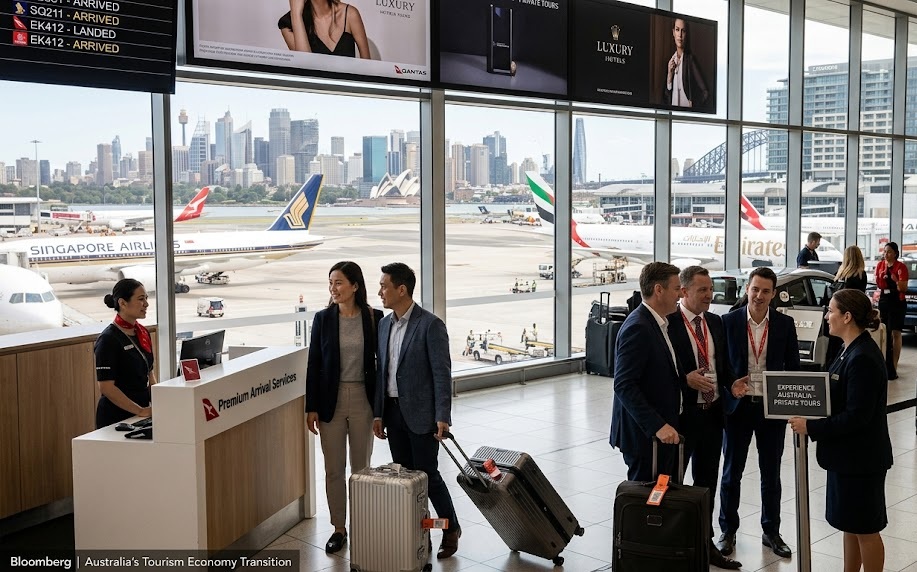
Australia’s tourism industry is undergoing a strategic transformation as the recovery shifts from focusing on visitor numbers to prioritizing higher-value spending, with international visitor expenditure already exceeding pre-COVID levels by 24% or $35 billion. As of March 2025, Australia welcomed 7.6 million international visitors — 95% of pre-COVID levels, but the real breakthrough is that each tourist is spending more than ever before, with average spending reaching nearly $4,000 per international visitor.
The tourism sector is nearing full recovery following the pandemic downturn, with domestic visitor numbers returning to pre-COVID trends and growing strongly. In the year to March 2025, domestic overnight visitation reached 114 million, exceeding pre-COVID levels for the third consecutive year, while domestic visitor spend hit $109 billion (151% of pre-COVID levels). The industry is now employing 702,800 tourism jobs — around 120,000 more than before the pandemic, highlighting its growing economic contribution.
Strategic Focus on Southeast Asia and High-Value Markets
As part of the Government’s Southeast Asia Strategy to 2040, Australia is committed to increasing engagement with Southeast Asian markets and attracting more high-value travelers from the region. The data shows visitors from Vietnam to Australia are more than 50% higher than pre-pandemic levels, representing an exciting growth opportunity for Australian businesses. The strategy emphasizes quality over quantity, targeting travelers who spend more on accommodation, dining, experiences, and retail rather than simply increasing tourist numbers.
New Zealand, China, the United States, the United Kingdom, and India remain Australia’s top five international tourism markets. Tourism officials are working to encourage more visitors from around the world while focusing marketing efforts on attracting travelers who will contribute higher spending per visit. The approach aligns with long-term trends showing that sustainable and eco-tourism is growing strongly, with domestic overnight tourists undertaking outdoor and nature-based activities increased by 27% between 2018 and 2024.
Regional Tourism and Sustainable Growth
The rebounding popularity of “holidaying at home” has provided critical support to local economies and tourism operators, with Australians traveling more frequently for short breaks to coastal and regional destinations. Regional operators are benefiting from this trend while tourism businesses are investing in greener practices to meet rising consumer and regulatory expectations. Domestic tourism continues to anchor the sector, with both interstate and intrastate trips above pre-pandemic volumes in many regions.
Looking ahead, the outlook for Australian tourism remains strong, with international travel expected to exceed pre-pandemic levels in 2026 and domestic travel forecast to pick up more sharply from 2026 onward. According to Deloitte’s data, almost one in four (38%) Australians are planning to book a domestic flight in the next three months, and almost a third intend to book an international flight (28%). While higher travel costs and slower global growth may act as headwinds, travel continues to hold a strong place in household budgets, demonstrating the resilience of Australia’s tourism industry.
Key Points
- 24% higher spending than pre-COVID — International visitor expenditure exceeds pre-pandemic levels by $35 billion despite visitor numbers at 95% of pre-COVID levels
- Average $4,000 per international visitor — Each tourist spending more than ever, with trip numbers reaching 89% of pre-pandemic levels in March 2024trademinister.gov
- 7.6 million international visitors (95% recovery) — March 2025 data shows international visitation closing in on full recovery, with 87.5 million nights stayed (105% of pre-COVID)trademinister.gov
- 114 million domestic visitors — Domestic overnight visitation exceeded pre-COVID levels for third year, with spend at $109 billion (151% of pre-COVID)
- 702,800 tourism jobs — Industry employing 120,000 more workers than before pandemic, highlighting growing economic contribution
- Vietnam visitors 50% higher — Southeast Asia Strategy to 2040 targeting high-value travelers, with Vietnam showing major growth opportunity for Australian businesses
Bottom Line
Australia’s tourism recovery has shifted from visitor numbers to higher-value spending, with international visitor expenditure 24% higher ($35 billion) than pre-COVID levels despite visitor arrivals at only 95% recovery. Each international tourist now spends an average of $4,000, while domestic visitation reached 114 million (151% of pre-COVID spend). The industry employs 702,800 jobs — 120,000 more than before the pandemic, anchoring the sector through domestic tourism and regional growth. Through the Southeast Asia Strategy to 2040, Australia is targeting high-value travelers from markets like Vietnam (50% higher than pre-pandemic), prioritizing quality over quantity.



More Stories
GIC Acquires 16 Marriott-Operated Hotels in Japan for About $800 Million Amid Tourism Boom
Choice Hotels to Acquire Harvest Hosts for ~$130M, Expanding Into RV and Outdoor Travel
Hyatt’s Luxury Push Across the Americas Centers on Mexico Park Hyatt Trio and Unbound Growth