











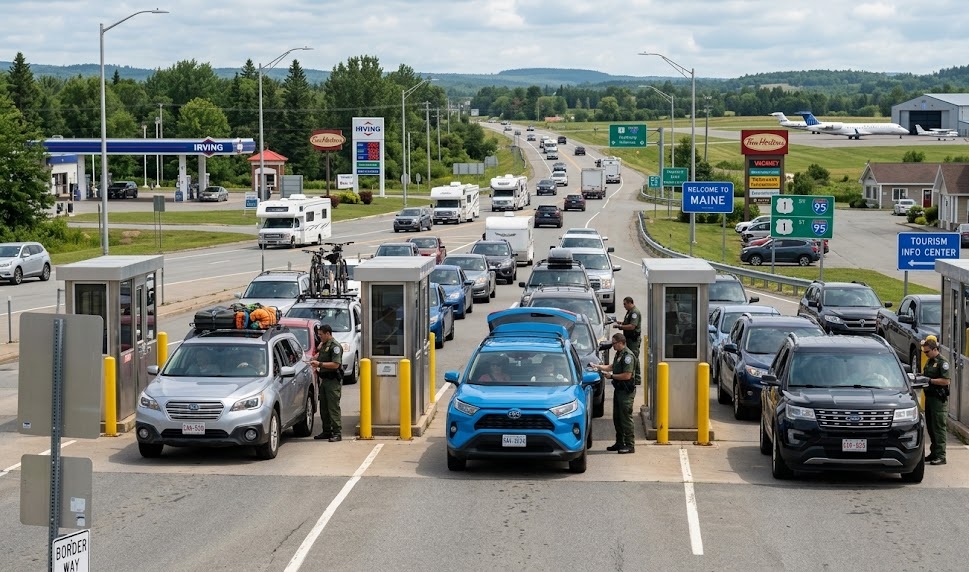
Travel between Canada and the United States showed signs of recovery in July 2026, with Canadian travel to the U.S. recording its fourth consecutive month of year-over-year growth. Canadian residents made approximately 2.3 million return trips from the United States, up 10.2% from July 2025, although the rebound remains well below pre-2025 levels.
The most notable change is the growing preference for road travel over air travel. Canadian return trips from the U.S. by automobile increased 12.8% year over year, while air travel declined 1.4%. Compared with July 2024, however, both modes remained significantly lower, showing that the latest increase represents a partial recovery rather than a full return to previous travel patterns.
Road Trips Lead the Cross-Border Recovery
The stronger performance of automobile travel is reshaping the Canada-U.S. travel picture. Road trips offer travelers greater flexibility, particularly for families and leisure travelers visiting destinations within driving distance of the border, while avoiding the cost and scheduling constraints associated with air travel.
The trend is particularly important for border communities, hotels, restaurants, fuel stations, attractions, and regional tourism businesses that depend heavily on visitors arriving by road. The recovery in automobile travel could provide a meaningful boost to these businesses during the busy summer tourism season.
Air Travel Remains Under Pressure
While cross-border travel is recovering, the aviation sector has not experienced the same momentum. Canadian return trips from the U.S. by air fell 1.4% from July 2025 and remained 26.8% below July 2024 levels, indicating that international air travel is still facing a slower recovery.
The difference between road and air travel suggests that travelers remain sensitive to cost, convenience, and flexibility when choosing how to cross the border. Airlines may therefore face continued pressure to adjust capacity, pricing, and routes as passenger preferences evolve.
U.S. Visitors Continue Supporting Canada
The recovery is also visible in the opposite direction. U.S. residents made 2.7 million trips to Canada in July, an increase of 6.5% year over year and the sixth consecutive month of annual growth.
Automobile travel accounted for 1.9 million U.S. trips to Canada, up 7.2%, while air arrivals reached approximately 749,000, an increase of 4.8%. This provides an important boost to Canada’s tourism industry, particularly during the summer peak.
New Border Infrastructure Adds Capacity
The opening of the Gordie Howe International Bridge on July 27 also adds a new dimension to cross-border travel. During its first few days of operation, the bridge recorded 18,900 Canadian-resident return trips from the U.S. by automobile and 18,100 U.S.-resident trips into Canada.
The new crossing is expected to strengthen transportation links between Windsor and Detroit, two of the most important points in the Canada-U.S. travel and trade network.
World Cup Travel Provides an Additional Boost
The 2026 FIFA World Cup also contributed to Canada’s international visitor activity during July, with Vancouver and Toronto hosting matches involving teams from several countries.
Air arrivals from the five overseas countries whose teams played in Canada during July increased 18.7% year over year, adding another layer of international tourism demand during an already busy summer travel period.
Key Takeaways
- Canadian return trips from the U.S. reached 2.3 million in July 2026, increasing 10.2% year over year.
- Automobile travel rose 12.8%, significantly outperforming air travel during the latest recovery.
- Air travel declined 1.4% year over year and remained well below July 2024 levels.
- U.S. residents made 2.7 million trips to Canada, marking a 6.5% annual increase and the sixth consecutive month of growth.
- The Gordie Howe International Bridge added new capacity to one of North America’s busiest cross-border corridors.
- FIFA World Cup activity helped strengthen international arrivals to Canadian host cities during July.
- The figures suggest that road travel is currently leading the Canada-U.S. tourism recovery, while air travel continues to face greater pressure.
Bottom Line
Canada-U.S. travel is showing a meaningful July rebound, but the recovery is being driven more strongly by road trips than air travel. With Canadian automobile crossings rising 12.8% and U.S. visits to Canada continuing to grow, border tourism is regaining momentum. However, travel volumes remain below 2024 levels, meaning the latest figures represent progress rather than a complete recovery.




More Stories
Australia Tourists Go Missing in Nepal Travel Nightmare Overtaken by Himalayan Floods
California Joins Michigan And Border Tourism Economies As US And Canada Tensions Trigger Nearly 35% Hospitality Fallout
Greece Suffers Economic Collapse As Fragile Island Communities Buckle Under Exhausting Summer Travel