










Tourism Australia is stepping up its focus on Southeast Asia, targeting the region as an important source of future international growth while placing greater emphasis on aviation capacity, high-value visitors and sustainable travel experiences. The strategy comes as global competition for international travelers intensifies and Australia looks to strengthen demand beyond traditional markets.
The push is supported by Tourism Australia’s broader Tourism 2035 strategy, which aims to increase spending from high-yield international travelers while building a more competitive and resilient tourism sector. In 2025, international visitors generated a record A$53.2 billion in overnight expenditure, with A$33 billion coming from targeted high-yield visitor groups.
Southeast Asia Becomes a Key Growth Market
Tourism Australia’s focus on Southeast Asia reflects the region’s growing importance to Australia’s visitor economy. The organisation held its Australia Marketplace Southeast Asia 2026 in Kuala Lumpur, bringing Australian tourism businesses together with travel agencies and tour operators from across the region.
The initiative is designed to strengthen trade relationships and promote Australia’s destinations and experiences to Southeast Asian travelers. With the region offering a large and increasingly sophisticated outbound travel market, stronger engagement could help Australia attract more visitors while encouraging longer and higher-value stays.
Aviation Capacity Remains Critical
For Australia, international aviation capacity is fundamental to tourism growth because of the country’s geographic distance from many major source markets. Tourism Australia has warned that additional capacity will be needed as international demand expands, with an estimated 4.4 million additional seats required by 2035.
International aviation capacity reached record levels in 2025, with almost 1,900 flights each week from 70 ports to 13 destinations across Australia. Maintaining and expanding these connections will be essential if Australia wants to convert rising interest from Southeast Asia into actual visitor growth.
Premium Travelers Become a Bigger Priority
Australia is increasingly targeting travelers who deliver greater economic value rather than focusing purely on visitor numbers. This includes holidaymakers, visiting friends and relatives, working holidaymakers, and business-events travelers who tend to contribute significantly to tourism spending.
The strategy could benefit accommodation providers, airlines, restaurants, tour operators and regional destinations by encouraging visitors to stay longer and explore more of the country. Tourism Australia’s premium focus also aligns with growing demand for distinctive experiences rather than simple sightseeing holidays.
Sustainable Experiences Take Center Stage
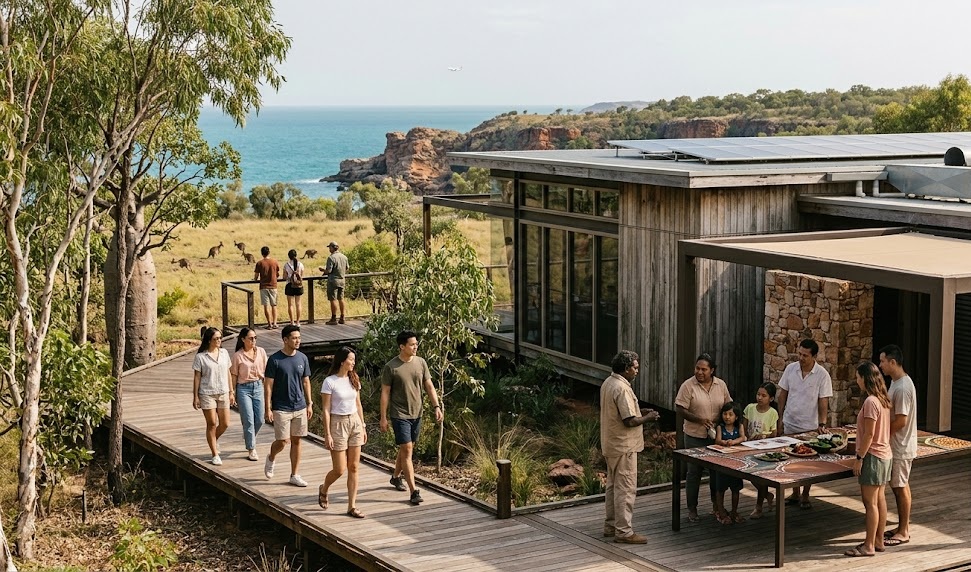
Sustainability is becoming another major part of Australia’s tourism strategy. Tourism Australia launched Green is Our Gold, an industry-wide initiative encouraging businesses to promote responsible travel and protect Australia’s natural environments, cultures and communities.
The initiative is built around five principles: celebrating communities, embracing culture, preserving places, respecting wildlife, and taking care. Tourism Australia says demand for experiences with positive social and environmental impacts is increasing, making sustainable tourism an increasingly important part of Australia’s international appeal.
Regional Tourism Could Gain From the Strategy
Australia’s tourism strategy is also designed to encourage visitors to explore beyond the country’s major gateway cities. Greater regional dispersal can spread tourism spending across smaller destinations while reducing pressure on heavily visited areas.
For Southeast Asian travelers, Australia’s combination of nature, wildlife, food, culture, beaches, adventure and premium experiences provides opportunities to build longer itineraries that extend beyond Sydney and Melbourne.
Key Takeaways
- Tourism Australia is strengthening its focus on Southeast Asia as an important source of future international visitor growth.
- Aviation capacity remains critical, with Australia expecting to need around 4.4 million additional international seats by 2035.
- International visitor expenditure reached a record A$53.2 billion in 2025, highlighting the economic importance of inbound tourism.
- Australia is targeting high-yield travelers who can generate greater spending across accommodation, experiences, transport and hospitality.
- Sustainable tourism is becoming a central part of Australia’s visitor strategy, with the Green is Our Gold initiative promoting responsible travel.
- Stronger international partnerships could encourage longer stays, regional travel and higher-value tourism from Southeast Asian markets.
Bottom Line
Australia is positioning Southeast Asia as a major growth opportunity while reshaping its tourism strategy around connectivity, higher-value visitors and sustainable experiences. With stronger aviation links, targeted international marketing and greater emphasis on nature, culture and responsible travel, Australia is aiming not simply to attract more visitors, but to build a more valuable and resilient tourism economy that can sustain growth through 2035.


More Stories
GIC Acquires 16 Marriott-Operated Hotels in Japan for About $800 Million Amid Tourism Boom
Spire Hospitality Launches AI-Driven Strategic Asset Performance Division for Hotel Owners
HVS: U.S. Hotel RevPAR Up Over 10% Mid-September as Nearly 1,000 Hotels Sold in H1 2026