










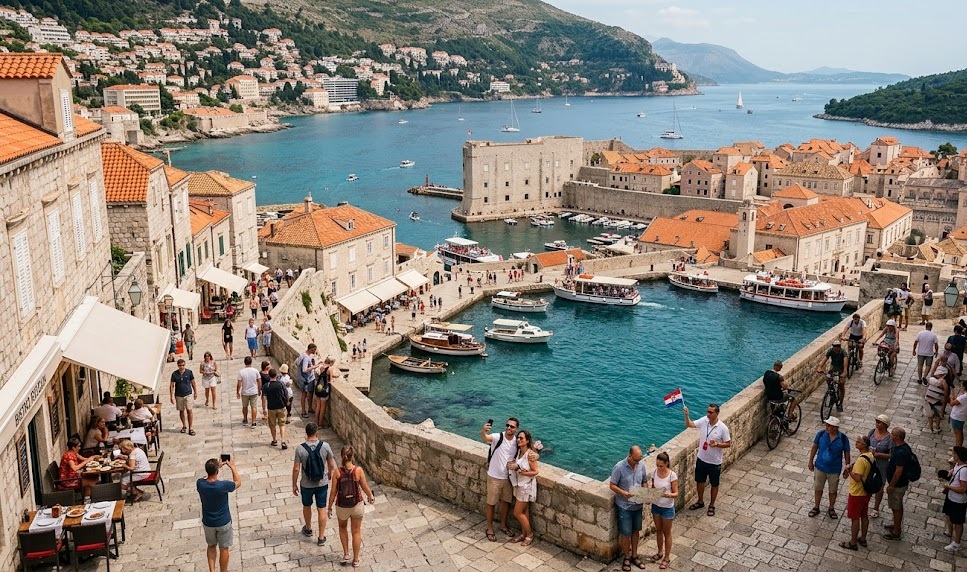
Croatia is maintaining strong momentum in 2026 as international travelers continue to favor its Adriatic coastline, historic cities, islands, and cultural destinations. The country recorded 4.5 million tourist arrivals and more than 14 million overnight stays from January through May, representing increases of 5% and 7% respectively compared with the same period last year.
The growth is being supported by both traditional European markets and long-haul visitors, while destinations such as Dubrovnik, Split, Rovinj, Zagreb, Poreč, and Zadar continue attracting substantial demand. The results show that Croatia’s tourism appeal extends beyond its most famous coastal destination, creating opportunities for a wider range of cities and regions.
Dubrovnik Remains a Major Tourism Magnet
Dubrovnik continues to stand out as one of Croatia’s most sought-after destinations, drawing visitors with its historic Old Town, Adriatic coastline, cultural heritage, and cruise tourism appeal. Tourist demand remains particularly strong during the warmer months, when the city’s combination of beaches, historic attractions, and Mediterranean atmosphere makes it a major draw for international travelers.
However, Croatia’s tourism growth is increasingly spreading beyond Dubrovnik. Other destinations along the Adriatic are attracting visitors looking for different experiences, from island holidays and coastal resorts to food, history, nature, and adventure tourism.
Adriatic Coast Continues to Lead
The Adriatic coast generated approximately 12.2 million overnight stays during the first five months of 2026, an 8% increase year over year. Istria, Split-Dalmatia, and Kvarner were among the strongest-performing regions, demonstrating the continued importance of coastal tourism to Croatia’s visitor economy.
At the same time, inland Croatia also recorded growth, suggesting that travelers are becoming more interested in exploring destinations away from the traditional seaside hotspots. This broader distribution could help extend the tourism season and spread visitor spending across more communities.
European Markets Remain Crucial
Croatia continues to benefit from strong demand from nearby European markets. Germany remained the leading source market, followed by domestic travelers, Slovenia, Austria, and the United Kingdom.
Long-haul markets are also contributing to the country’s international tourism performance. Visitors from the United States recorded more than 540,000 overnight stays during the first five months, highlighting the growing importance of North American travelers to Croatia’s tourism sector.
Air Connectivity Supports Growth
Improving international connectivity is helping Croatia capture demand from both European and long-haul markets. Croatia Airlines is continuing its fleet modernization and network expansion, while additional international services are strengthening connections to destinations such as Split and Dubrovnik.
Greater air capacity is particularly important for Croatia’s ability to attract visitors from markets outside Europe, where convenient direct connections can strongly influence destination choice.
Tourism Growth Faces a Competitive Summer
Despite the positive start to the year, Croatian tourism authorities remain cautious about the peak summer period. Higher travel costs, geopolitical uncertainty, fuel prices, and competition from other Mediterranean destinations could influence booking decisions.
Croatia is therefore placing greater emphasis on competitive pricing, service quality, and extending tourism beyond the traditional July-August peak. Encouraging visitors to travel during the shoulder seasons could help businesses maintain demand for longer and reduce pressure on the most crowded destinations.
Key Takeaways
- Croatia recorded 4.5 million tourist arrivals and more than 14 million overnight stays from January to May 2026, marking strong year-on-year growth.
- Dubrovnik remains one of the country’s leading tourism destinations, supported by its historic attractions, coastline, and international reputation.
- The Adriatic coast generated 12.2 million overnight stays, with Istria, Split-Dalmatia, and Kvarner among the strongest-performing regions.
- Germany, Slovenia, Austria, and the UK remain important international source markets, while U.S. demand continues to strengthen.
- Growing air connectivity and Croatia Airlines’ network expansion are helping support international visitor growth.
- Croatia is increasingly promoting regional destinations and shoulder-season travel to spread tourism demand and reduce pressure on peak summer periods.
Bottom Line
Croatia is entering the 2026 summer season from a position of strong tourism momentum, with Dubrovnik continuing to dominate international attention while destinations across the Adriatic and inland regions gain ground. Rising arrivals, longer stays, strong European demand, and improving long-haul connectivity are supporting the country’s tourism economy.



More Stories
GIC Acquires 16 Marriott-Operated Hotels in Japan for About $800 Million Amid Tourism Boom
Choice Hotels to Acquire Harvest Hosts for ~$130M, Expanding Into RV and Outdoor Travel
Hyatt’s Luxury Push Across the Americas Centers on Mexico Park Hyatt Trio and Unbound Growth