












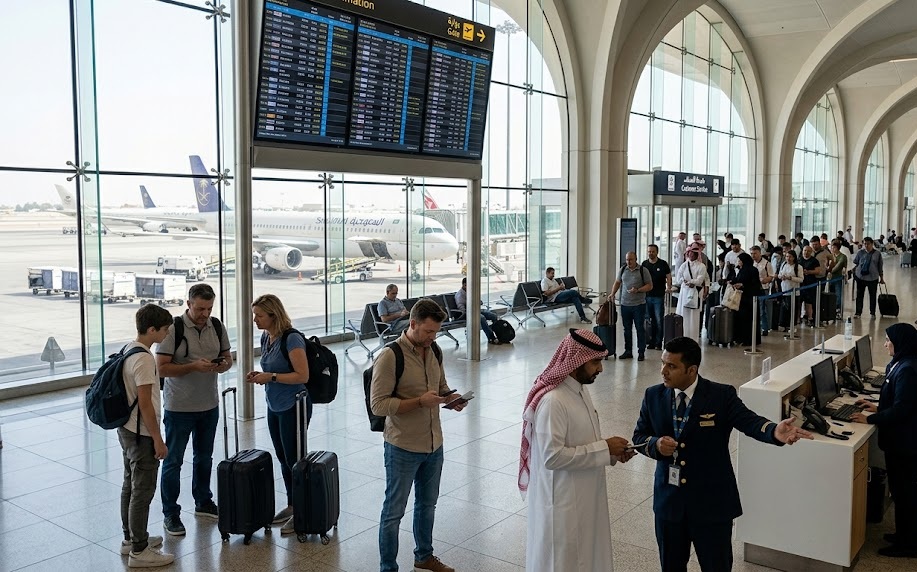
New security alerts issued across the Middle East are raising concerns for international travellers as regional tensions create uncertainty around flight schedules, airport operations and airspace access. On October 18–19, 2026, US diplomatic missions warned Americans in 12 locations across the region to exercise heightened vigilance and prepare for possible travel disruption.
Security Warnings Affect Travel Plans
The latest alerts cover Saudi Arabia, the United Arab Emirates, Qatar, Bahrain, Kuwait, Oman, Jordan, Israel, Iraq, Lebanon, Yemen and Iran. Authorities warned that the security situation could change quickly, potentially affecting commercial aviation and travel arrangements.
Travellers are being advised to monitor official announcements, follow local authority instructions and remain alert to changes affecting their destination or transit route. The alerts do not automatically mean that every destination or flight is closed, but they underline the importance of checking conditions before departure. <cite></cite>
Flight Disruptions Remain a Key Concern
Airspace restrictions, route changes, delays and cancellations are among the main risks highlighted by officials. Airlines may need to adjust flight paths or schedules in response to evolving security conditions, affecting both direct journeys and connecting flights.
Saudi Arabia has faced particular aviation concerns. On October 16, Delta Air Lines advised that travel to, from or through the Riyadh area could be affected by the security situation. Travellers connecting through major regional hubs should confirm their flight status directly with their airline before heading to the airport. <cite></cite>
Airlines and Tourism Businesses Face Uncertainty
The renewed alerts add pressure to airlines, hotels, tour operators and travel agencies that depend on predictable schedules. Sudden changes can lead to missed connections, itinerary revisions and additional costs for passengers, particularly those travelling across multiple countries.
Business travel, family visits and religious journeys may also require closer planning. Tourism companies are likely to face more questions from customers seeking updated safety information, flexible booking options and alternatives if their flights are disrupted.
What Travellers Should Do
Travellers planning journeys to or through the region should:
- Check flight status directly with the airline before leaving for the airport.
- Review official government travel advisories for each destination and transit country.
- Confirm hotel bookings, transfers and onward connections.
- Keep passports, travel documents and airline contact details accessible.
- Check whether their travel insurance covers disruption related to security incidents.
- Follow instructions from local authorities and diplomatic missions.
- Avoid security-sensitive locations and do not approach suspicious objects or debris.
The US Department of State advises Americans in the region to follow the latest embassy guidance and monitor airline and airport operations. <cite></cite>
Key Takeaways
- Security alerts issued on October 18–19 cover 12 Middle Eastern locations.
- Regional tensions have increased uncertainty for international travel.
- Flight cancellations, delays and airspace restrictions remain possible.
- Saudi Arabia has faced additional concerns affecting aviation operations around Riyadh.
- Airlines may change routes or schedules at short notice.
- Tourism businesses may experience booking uncertainty and increased demand for flexible arrangements.
- Travellers should check official advisories and reconfirm flights before departure.
- Conditions vary by country, airport and airline, so travellers should assess their specific itinerary.
Bottom Line
New security alerts are placing Middle East travel under closer scrutiny as authorities warn of potential escalation and aviation disruption. The region remains diverse, and conditions differ between destinations; travellers should avoid making assumptions based on a regional headline alone. Checking current official guidance and confirming flights directly with airlines are essential before travelling.




More Stories
Middle East Airports Face 108 Cancellations and 1,056 Delays
Spain Tourism 2030 Sets a New Direction for Travel
Italy Tightens Access at Historic World Heritage Sites