












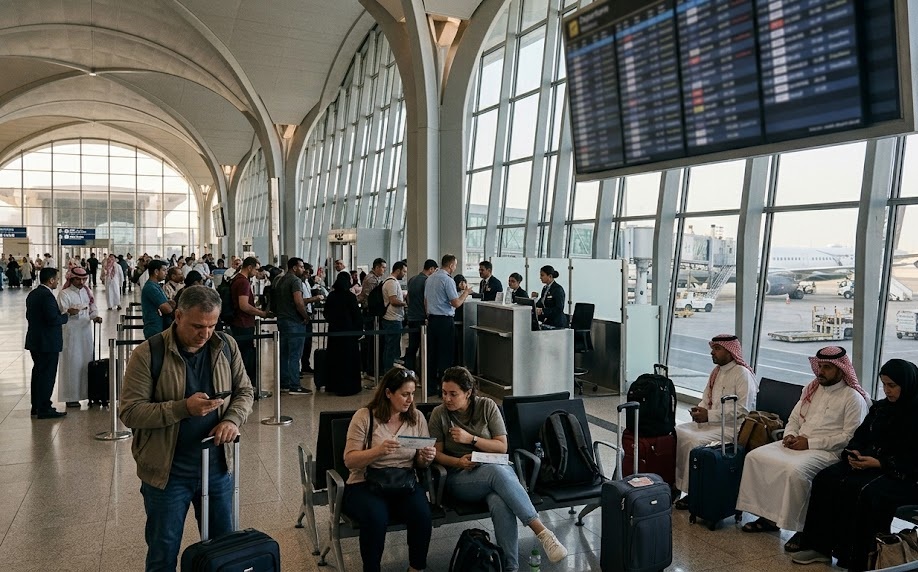
Air travel across the Middle East experienced another wave of disruption on October 28, 2026, with major airports recording 108 flight cancellations and 1,056 delays. The disruption affected passengers travelling through Saudi Arabia, the United Arab Emirates, Qatar, Bahrain and other regional aviation hubs.
The latest figures highlight the pressure on the region’s aviation network, where security concerns, changing airline schedules and operational restrictions are affecting international connections and passenger journeys.
Saudi Arabia Records the Highest Number of Disruptions
Saudi Arabia accounted for the largest share of the reported airport disruptions. King Abdulaziz International Airport in Jeddah recorded 26 cancellations and 164 delays, making it the most affected airport in the reported figures.
Other Saudi airports also experienced significant disruption:
- King Khalid International Airport, Riyadh: 17 cancellations and 22 delays.
- King Fahd International Airport, Dammam: 7 cancellations and 49 delays.
- Prince Naif bin Abdulaziz International Airport: 7 cancellations and 21 delays.
- Prince Mohammad bin Abdulaziz International Airport, Madinah: 6 cancellations and 35 delays.
- Abha Regional Airport: 7 cancellations and 20 delays.
- Prince Sultan bin Abdulaziz Regional Airport, Tabuk: 5 cancellations and 11 delays.
Together, these seven airports recorded 75 cancellations and 322 delays, demonstrating the scale of pressure across Saudi Arabia’s aviation network.
Dubai, Doha and Abu Dhabi Face Extensive Delays
The United Arab Emirates and Qatar also experienced considerable operational pressure.
Dubai International Airport recorded 11 cancellations and 163 delays, while Zayed International Airport in Abu Dhabi reported three cancellations and 115 delays.
At Hamad International Airport in Doha, three cancellations and 146 delays were recorded. Bahrain International Airport experienced nine cancellations and 31 delays, while Kuwait International Airport reported two cancellations and 20 delays.
Although cancellation numbers were relatively low at some major Gulf hubs, the high number of delayed flights indicates wider scheduling challenges. Passengers connecting between international and regional services may experience longer waiting times and missed onward connections.
Istanbul and Tel Aviv Also Experience Disruption
Flight delays extended beyond the Gulf region to other important aviation gateways.
Istanbul Airport recorded 119 delays and two cancellations, while Istanbul Sabiha Gökçen International Airport reported 81 delays and one cancellation.
Ben Gurion International Airport in Tel Aviv also experienced disruption, recording 59 delays and two cancellations.
These figures demonstrate how operational challenges can extend across interconnected aviation markets, affecting passengers travelling between Europe, the Middle East and Asia.
Airlines Face Operational Pressure
Regional carriers are also experiencing schedule disruption.
Saudia recorded 25 cancellations and 116 delays in the reported airline data. Qatar Airways experienced three cancellations and 131 delays, while Gulf Air reported nine cancellations and 20 delays.
Air Arabia recorded one cancellation and 58 delays. Turkish Airlines reported two cancellations and 99 delays, while Pegasus Airlines recorded one cancellation and 126 delays.
These airline figures are separate from the airport totals and should not be added together, as the datasets may overlap.
Security Concerns Add Pressure to Regional Aviation
The disruption comes amid serious security concerns affecting Saudi aviation. Recent reporting has documented widespread flight cancellations following attacks and restrictions affecting operations at Saudi airports.
According to aviation analytics firm Cirium, more than 7,800 departures across Saudi Arabia were cancelled or recorded as no-fly between October 8 and 25. Riyadh experienced particularly severe disruption, with international airlines adjusting or suspending services.
These wider developments demonstrate how security conditions can affect airline networks, aircraft availability and passenger connections across the region. However, not every delay recorded at Gulf airports can be attributed directly to security restrictions. <text color=”secondary” size=”xs”>Based on reporting published October 26, 2026.</text>
What Travellers Should Do
Passengers planning to travel through affected Middle Eastern airports should take additional precautions:
- Check flight status regularly: Confirm departure information directly with the airline.
- Monitor connecting flights: Delays on the first leg may affect onward journeys.
- Contact airlines about cancellations: Ask about rebooking, refunds and alternative routes.
- Allow additional connection time: Avoid tight transfers where possible.
- Keep essential documents accessible: Carry passports, booking confirmations and important medication.
- Monitor official advisories: Follow airport announcements and government travel guidance.
- Keep expense records: Retain receipts and disruption notifications for possible insurance or reimbursement claims.
Key Takeaways
- Middle Eastern airports recorded 108 cancellations and 1,056 delays in the reported October 28 data.
- Jeddah recorded the highest airport-level figures, with 26 cancellations and 164 delays.
- Riyadh and Dammam also experienced significant disruption.
- Dubai recorded 163 delays, while Doha reported 146.
- Abu Dhabi experienced 115 delayed flights.
- Istanbul and Tel Aviv also reported flight disruptions.
- Major regional airlines, including Saudia, Qatar Airways and Gulf Air, experienced operational challenges.
- Security concerns and airline schedule adjustments continue to affect regional aviation.
- Passengers should verify flight information before travelling to the airport.
Bottom Line
The latest figures underline the continuing pressure on Middle Eastern aviation, with more than 1,000 delayed flights affecting major regional gateways. Saudi Arabia accounted for a substantial share of the reported cancellations, while Dubai, Doha and Abu Dhabi experienced considerable delays. For international travellers, checking airline updates, allowing extra connection time and remaining flexible with travel arrangements are essential when flying through the region.




More Stories
Middle East Travel Faces New Security Alerts
Spain Tourism 2030 Sets a New Direction for Travel
Travellers Warned Over Fake ETIAS Emails And Websites