












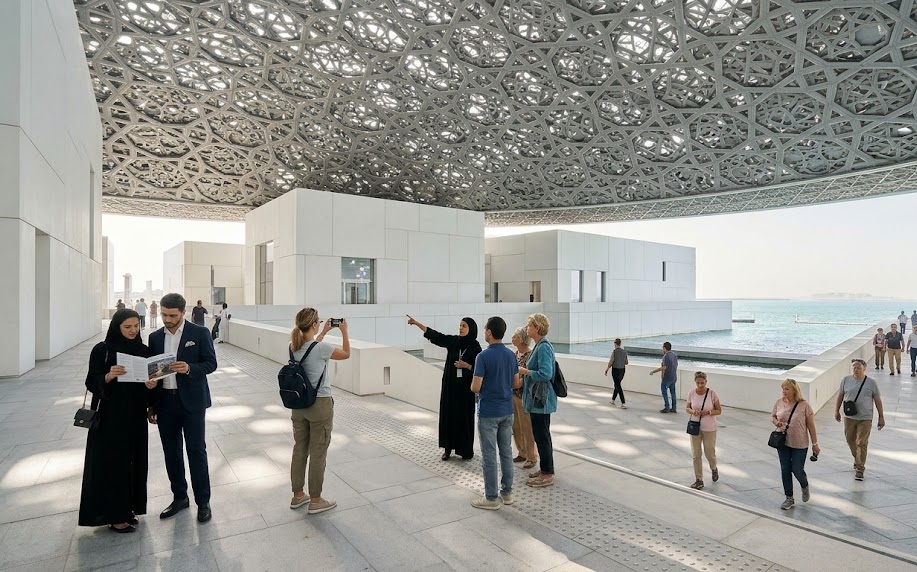
The United Arab Emirates (UAE) is strengthening its position as a global tourism destination by turning its cultural heritage, museums, art institutions and traditional experiences into major visitor attractions. Alongside its luxury hotels, shopping centres and entertainment destinations, the country is investing in cultural experiences that give international travellers a deeper understanding of its history and identity.
Recent tourism figures from Abu Dhabi highlight the growing importance of culture in attracting visitors, while national initiatives are encouraging travellers to explore all seven emirates rather than limiting their trips to Dubai and Abu Dhabi.
Abu Dhabi Emerges as a Global Cultural Destination
Abu Dhabi is seeing strong growth in cultural tourism. The emirate welcomed a record 26.6 million visitors in 2025, while more than 8.6 million visits were recorded across its cultural sites and libraries.
Major attractions include Louvre Abu Dhabi, which welcomed approximately 1.4 million visitors, and Qasr Al Hosn, which recorded more than 843,000 visitors, representing a 22% increase year over year.
The expansion of the Saadiyat Cultural District is further strengthening Abu Dhabi’s international profile. Its museums and cultural institutions bring together art, history, science and architecture, creating a destination that appeals to travellers interested in more than conventional leisure tourism.
Heritage Experiences Connect Visitors With Emirati Identity
The UAE is also using its traditional heritage to create more meaningful visitor experiences. Historic forts, archaeological sites, heritage villages, traditional markets and cultural festivals offer travellers opportunities to discover the country’s history and way of life.
In Dubai, Al Shindagha Museum explores the emirate’s transformation from a historic trading and pearl-diving settlement into a modern international city. In Al Ain, UNESCO-listed cultural landscapes, ancient archaeological sites and traditional oases provide a connection to the region’s early settlements.
Sharjah also plays an important role through its museums, heritage districts and cultural festivals, helping diversify the UAE’s tourism offering beyond its best-known urban destinations.
New Attractions Expand the Cultural Tourism Offering
The UAE continues to invest in attractions that combine culture, education and contemporary experiences. Abu Dhabi’s growing portfolio includes teamLab Phenomena, Louvre Abu Dhabi, the Natural History Museum Abu Dhabi and Zayed National Museum.
These institutions provide different perspectives on art, science, human civilisation and the country’s national story. The wider development of the Saadiyat Cultural District is helping establish Abu Dhabi as an international destination for museum visits and cultural exploration.
The emirate is also developing major leisure attractions on Yas Island, creating opportunities to combine cultural visits with family entertainment and longer holiday stays.
UAE Grand Tour Encourages Multi-Emirate Travel
A major part of the country’s strategy is encouraging visitors to explore more than one emirate. The Visit UAE national tourism identity and the UAE Grand Tour platform bring together destinations across all seven emirates.
The Grand Tour offers itineraries of up to 14 days, combining cultural heritage, nature, adventure, wellness and leisure experiences. This approach aims to encourage longer stays while distributing visitor spending across a wider range of destinations.
For travellers, it creates opportunities to combine Dubai’s modern attractions with Abu Dhabi’s museums, Sharjah’s heritage, Ras Al Khaimah’s landscapes and Fujairah’s coastal experiences.
Culture Supports the UAE’s Wider Tourism Economy
The country’s tourism performance demonstrates the economic importance of its expanding visitor offering. Travel and tourism contributed approximately AED251.3 billion to the UAE economy in 2025, while international visitor spending reached around AED209 billion.
The country’s hotels welcomed approximately 32.34 million guests during the year, supported by extensive international air connectivity and investment in hospitality infrastructure.
Cultural attractions add another dimension to this growth by encouraging visitors to extend their stays, explore additional destinations and spend on local experiences, restaurants, accommodation and guided tours.
Key Takeaways
- Culture is becoming a major tourism driver for the UAE, complementing luxury, shopping and entertainment.
- Abu Dhabi welcomed a record 26.6 million visitors in 2025.
- More than 8.6 million visits were recorded at Abu Dhabi’s cultural sites and libraries.
- Louvre Abu Dhabi attracted approximately 1.4 million visitors.
- Qasr Al Hosn recorded more than 843,000 visitors, up 22% year over year.
- Museums, heritage villages, archaeological sites and cultural festivals are strengthening the UAE’s international appeal.
- The UAE Grand Tour encourages visitors to explore all seven emirates through multi-day itineraries.
- Travel and tourism contributed approximately AED251.3 billion to the UAE economy in 2025.
Bottom Line
The UAE is building a tourism identity that extends beyond luxury hotels and modern attractions. By investing in museums, heritage preservation, cultural districts and multi-emirate travel experiences, the country is turning its history and identity into valuable tourism assets. This strategy is helping attract culturally curious travellers while supporting longer stays and broader economic benefits across the seven emirates.




More Stories
Middle East Travel Faces New Security Alerts
Middle East Airports Face 108 Cancellations and 1,056 Delays
Spain Tourism 2030 Sets a New Direction for Travel