












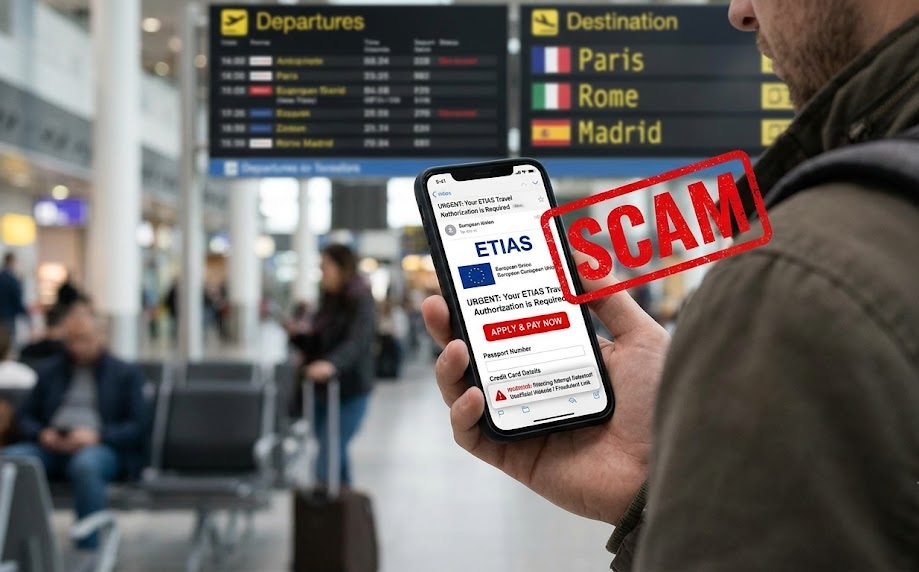
Travellers planning trips to Europe are being warned about fraudulent websites and misleading emails claiming to offer European Travel Information and Authorisation System (ETIAS) approvals. More than 150 websites are reportedly advertising ETIAS applications despite the European Union’s authorisation system not yet being operational.
The warning comes as European authorities prepare for changes to border security procedures, creating opportunities for scammers to target travellers who are unfamiliar with the upcoming requirements.
Fake ETIAS Websites Raise Fraud Concerns
Several unofficial websites are reportedly using European Union branding, similar website designs and misleading application services to appear legitimate. Some claim to provide immediate ETIAS approvals or allow travellers to submit applications before the official system opens.
These websites may expose travellers to unnecessary charges, identity theft and financial fraud. Personal information such as passport details, email addresses, telephone numbers and payment card information could be collected by untrustworthy operators.
The European Border and Coast Guard Agency, Frontex, has previously warned that unofficial websites may imitate the appearance of official EU services or provide inaccurate information about application requirements.
ETIAS Applications Are Not Yet Open
An important warning for travellers is that ETIAS is not currently accepting applications. The European Union has not confirmed an operational launch date, and travellers should not pay websites claiming to provide approved authorisations at this stage.
Once introduced, ETIAS will apply to eligible visa-exempt travellers visiting 30 participating European countries for short stays. The system will link travel authorisation to the traveller’s passport.
The application fee is expected to be €20, with exemptions from the fee for certain age groups. The final launch arrangements and application procedures should be checked through official European Union announcements.
Email Access Could Become Another Travel Risk
The warning also highlights the importance of maintaining access to the email address used during an ETIAS application.
Once the system becomes operational, applicants will receive confirmation messages, application reference numbers and decisions through their registered email accounts. Authorities may also request additional documents or provide important application updates.
Travellers using third-party intermediaries should ensure they retain direct access to the email address submitted on their behalf. Losing access could result in missed notifications and complications when checking an application.
How Travellers Can Identify Fraudulent Services
Travellers should take precautions before sharing personal information or making payments through websites claiming to offer ETIAS services.
- Use the official EU website: Check information through the European Union’s official ETIAS portal.
- Verify the website domain: Official EU websites use the europa.eu domain.
- Avoid early applications: No official ETIAS application can currently be submitted.
- Be cautious with emails: Do not click suspicious links or provide passport and payment details through unverified messages.
- Avoid unrealistic promises: Claims of guaranteed or immediate approval before the system opens are warning signs.
- Protect email access: Maintain control of the email address associated with any future application.
- Check application fees: Be cautious of websites demanding excessive payments or presenting additional service charges as mandatory government fees.
Travel Industry Faces Growing Consumer Protection Challenges
The spread of unofficial ETIAS services creates additional challenges for airlines, travel agencies, tour operators and online booking platforms. Travellers may mistakenly believe that purchasing an authorisation through an unofficial website is necessary before booking or departing for Europe.
Travel companies are therefore expected to play an important role in communicating accurate information about upcoming entry requirements. Clear guidance can help customers avoid unnecessary payments, protect personal information and prepare for future border procedures.
Key Takeaways
- More than 150 websites are reportedly advertising ETIAS applications before the official system opens.
- Fraudulent websites may imitate European Union branding and official application services.
- ETIAS is not currently operational, and applications are not being accepted.
- The expected application fee is €20.
- Unofficial services may expose travellers to financial fraud and identity theft.
- Applicants should retain access to their registered email addresses.
- The official EU website uses the europa.eu domain.
- Travellers should rely on official European Union announcements for launch dates and application procedures.
Bottom Line
Fake ETIAS websites and misleading emails are creating new risks for travellers preparing to visit Europe. With applications not yet open, there is no reason to pay unofficial platforms claiming to provide immediate authorisation. Travellers should verify information through official EU channels, protect their personal details and wait for the confirmed launch before applying.




More Stories
Middle East Travel Faces New Security Alerts
Middle East Airports Face 108 Cancellations and 1,056 Delays
Spain Tourism 2030 Sets a New Direction for Travel