












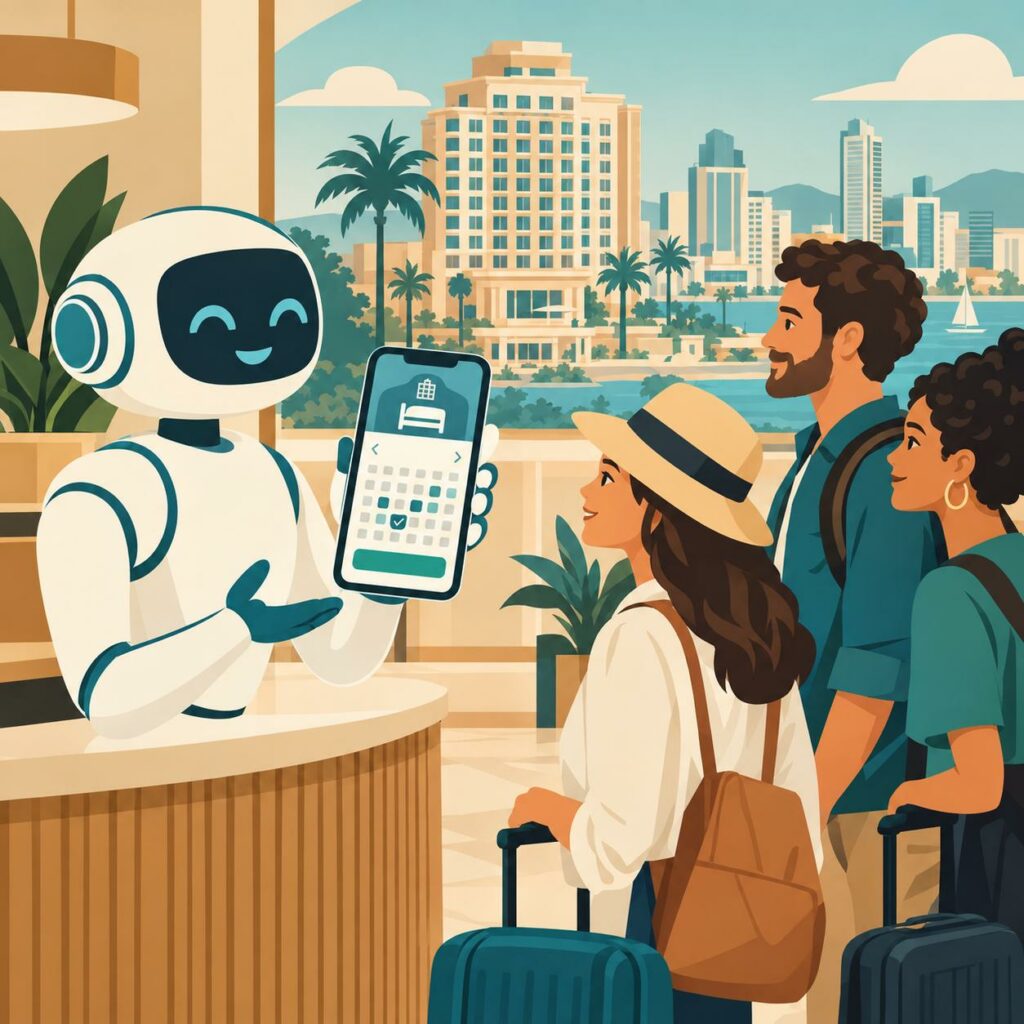
Expedia Group CEO Ariane Gorin said the company has not yet seen AI agents affect how people book travel.
What this tells us
Many headlines suggest that AI agents will replace search and booking sites soon. A leader of one of the largest travel companies says the real effect is not visible yet. Real bookings through agents are still small.
Why it still matters
Small today does not mean small next year. The groundwork being laid now, such as supplier connections, data formats and consumer trust, will decide how fast agents grow. Hotels that wait until bookings are visible may find that the best positions are already taken.
Two ways to be wrong
- Panic. Rebuilding everything now, spending large budgets on tools that may change in six months.
- Ignore. Waiting until a competitor is already the one that AI assistants recommend.
A calm plan for the next 90 days
- Ask three or four AI assistants about your hotel and record what they say.
- Put your property facts in one clean, accurate place: rooms, rates policies, amenities, location, FAQs.
- Make sure your website loads fast and shows clear rates on mobile.
- Track any traffic and bookings coming from AI tools, even if small.
The takeaway
Prepare quietly, without a big spend. The work is the same work that helps with search engines and direct bookings, so it pays off either way. When agent bookings grow, your hotel will be ready, and you will have data to show for it.
Reading a CEO comment carefully
A CEO saying the company has not yet seen AI agents change booking habits is a statement about data from one company’s customers at one time. It is useful evidence, but not a forecast. A large online travel agency has a deep base of existing users who book in familiar ways. A shift among new or younger travelers could take time to show up in totals.
Executives also have reasons to emphasize stability. Investors want reassurance that the core business is not under immediate threat. That does not make the statement wrong. It means it should be weighed with other evidence, such as the growing share of traffic from AI tools reported by hotel brands, and the product launches from major platforms.
Why it still matters
Even if habits have not changed, the tools are being built and tested. Booking behavior changes slowly and then quickly. Once an easy, trusted way to plan and book exists, adoption can accelerate. Hotels that wait for clear proof may find they are late.
Two ways to be wrong
- Overreacting. Spending heavily on unproven tools, or restructuring distribution around a channel that is still tiny, wastes money.
- Underreacting. Ignoring the shift entirely, then discovering that discovery and booking have moved to places where your hotel information is missing or poor.
The right posture is steady, low-cost preparation with regular review.
A calm plan for the next ninety days
- Weeks 1-2: audit. Check your website, listings and descriptions. Fix errors and gaps. Make sure room types, policies and amenities are consistent across all channels.
- Weeks 3-6: measure. Ask your web analytics provider to report visits from AI assistants and chat tools. Add a question to your booking or check-in process, “How did you find us?” with an AI option.
- Weeks 7-10: improve content. Add clear answers to common guest questions on your site: parking, pets, accessibility, distance to key places, check-in times. These are the questions assistants answer.
- Weeks 11-13: review. Compare numbers with the start. Decide whether to invest further or hold.
Who should care most
Independent hotels and small groups depend on discovery more than big brands do. They have fewer marketing resources and less data. For them, a few hours of careful work on content and measurement are a cheap way to stay visible.
The takeaway
Right now, evidence says AI agents are not changing booking habits at scale. The sensible response is not to panic or to ignore, but to prepare, measure and adjust. The cost of preparing is low. The cost of being invisible to a new channel could be high.



More Stories
Booking Holdings’ AI Agent Vayo Can Now Reserve Hotels and Flights
United Airlines Blocks Unauthorized AI Agents From Booking Flights: A Warning for Hotels
Spire Hospitality Launches AI-Driven Strategic Asset Performance Division for Hotel Owners