












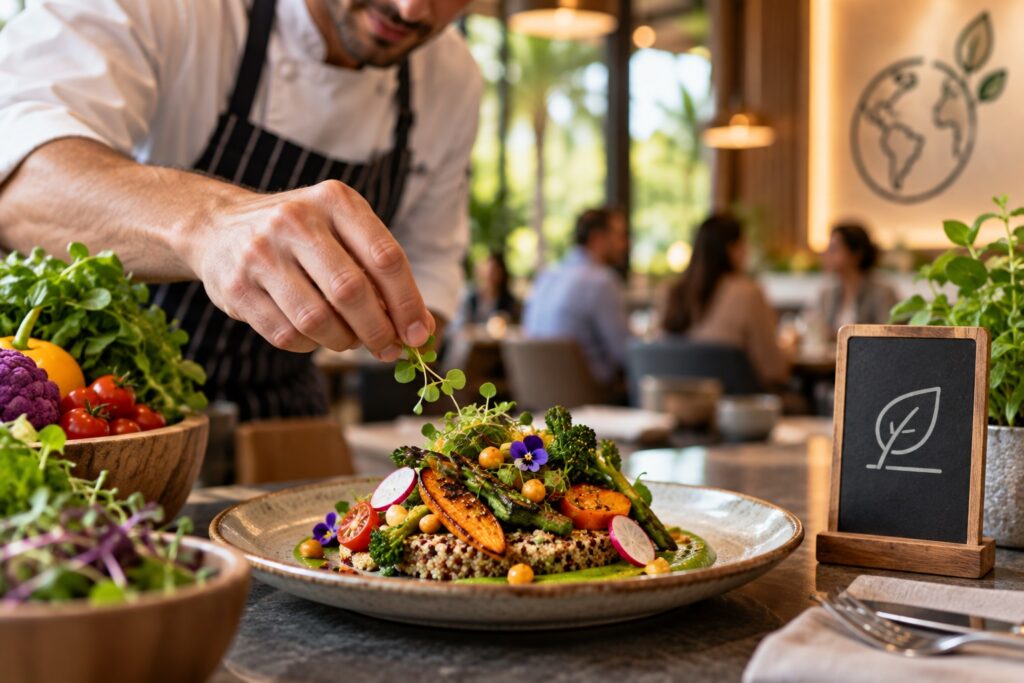
In the modern hospitality landscape, sustainability is no longer a marketing checkbox; it is an operational imperative. Nowhere is this more evident than in food and beverage operations, which account for a disproportionately large share of a property’s Scope 3 greenhouse gas emissions. A growing coalition of over 80 European hostels, led by networks like Europe’s Famous Hostels, is proving that rethinking the protein mix on the plate is one of the most financially sensible and impactful levers available to operators.
Transitioning to plant-forward menus is not about restricting guest choice; it is about expanding it to meet surging demand. Today’s travelers actively seek dining options that align with their values: meals that are sustainable, health-conscious, and flavorful. By broadening plant-based offerings, properties can significantly reduce their carbon footprint while simultaneously elevating the guest experience.
For hoteliers and F&B directors, the strategic takeaway is clear. Integrating sustainable, plant-rich options into your culinary programming is a dual-win. It mitigates regulatory and environmental risks associated with Scope 3 emissions while directly answering the modern traveler’s appetite for responsible hospitality. The properties that standardize these offerings today will not only lead in sustainability metrics but will also capture the loyalty of the next generation of conscious consumers.




More Stories
Hotels Adopt GenAI; Few Cut Manual Work
European Travel Demand Stayed Resilient This Summer
Industry Report: Navigating the Franchise Agreement – A Strategic Imperative for New Hotel Owners