









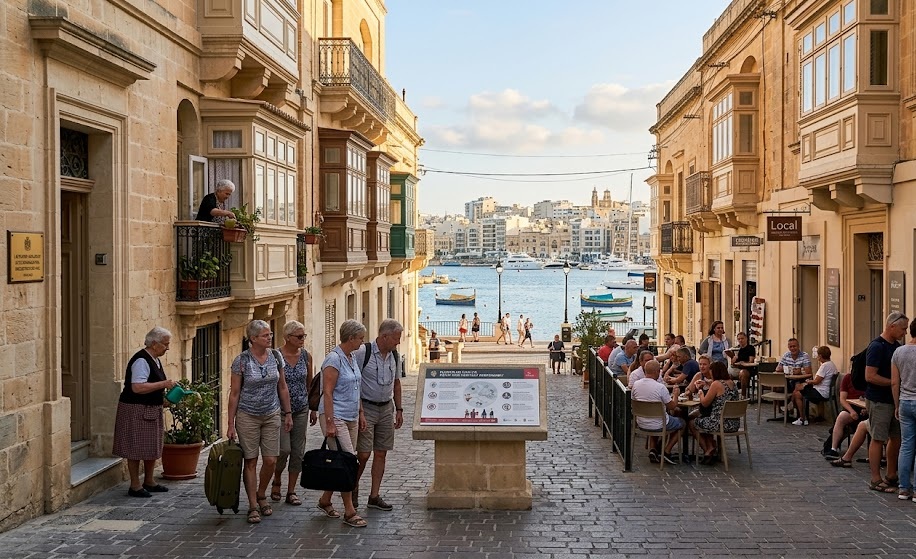
Malta is intensifying its efforts to tackle overtourism, introducing stricter regulations, stronger enforcement measures, and new controls on short-term holiday rentals as growing numbers of residents demand action against the pressures created by record visitor numbers. The island, one of the Mediterranean’s most popular travel destinations, is now seeking a better balance between maintaining a thriving tourism industry and protecting the quality of life for local communities.
After years of rapid tourism growth, many neighborhoods have experienced increasing complaints about noise, overcrowding, illegal holiday rentals, traffic congestion, and mounting pressure on public infrastructure. In response, authorities are rolling out a range of measures designed to improve visitor management while ensuring tourism remains sustainable for both residents and businesses.
Residents Demand Change
Communities in Swieqi, Sliema, Valletta, Marsaskala, and other popular tourist areas have become increasingly vocal about the impact of unregulated tourism. Residents have organized demonstrations and raised concerns over the growing number of illegal short-term rental properties, late-night disturbances, overflowing waste, and the gradual transformation of residential neighborhoods into tourist accommodation hubs.
Many locals argue that while tourism is vital to Malta’s economy, unchecked growth has begun affecting everyday life, reducing housing availability and placing additional strain on essential public services.
Government Introduces Tougher Tourism Rules
To address these concerns, Maltese authorities are strengthening oversight of the short-term rental market with stricter enforcement and higher penalties for illegal operators.
Among the key measures being introduced are:
- Tougher enforcement against unlicensed holiday rentals.
- Mandatory visible licensing signage for approved short-term accommodation.
- 24/7 contact information displayed at licensed properties to ensure complaints can be addressed quickly.
- Higher penalties for operators violating tourism regulations.
- Improved monitoring and faster complaint resolution in high-impact residential areas.
Authorities are also considering broader reforms that would reshape how short-term rentals operate across the island.
New Proposals Aim to Manage Visitor Growth
Beyond immediate enforcement, Malta is exploring several long-term strategies designed to create a more sustainable tourism model.
Proposals currently under consideration include:
- Limits on the number of guests allowed in certain accommodation properties.
- Designated short-term rental zones to better separate tourism activity from residential neighborhoods.
- Blacklisting repeat offenders operating illegal accommodation.
- Greater oversight of holiday rental licensing and compliance.
These measures are intended to prevent excessive concentrations of tourist accommodation while preserving the character and livability of local communities.
Blue Lagoon Shows Early Success
One of Malta’s most notable visitor management initiatives has been introduced at the Blue Lagoon on Comino, one of the country’s busiest tourist attractions.
A free visitor booking system has significantly reduced overcrowding during peak hours, with visitor numbers falling by approximately 68% during the busiest periods. Alongside the reservation system, authorities have increased investment in:
- Additional cleaning services
- More security personnel
- Extra lifeguards
- Improved visitor management and safety measures
The initiative demonstrates how proactive planning and controlled visitor access can help protect popular attractions while improving the overall experience for visitors.
Balancing Tourism and Local Quality of Life
Tourism remains one of Malta’s most important economic sectors, supporting thousands of jobs across hospitality, transport, retail, and tourism services. However, policymakers are increasingly recognizing that long-term success depends not only on attracting visitors but also on ensuring that local communities continue to benefit from tourism without bearing disproportionate social and environmental costs.
The latest reforms reflect a broader shift toward responsible tourism management, where economic growth is balanced with community well-being, environmental protection, and sustainable destination planning.
Key Takeaways
- Malta is strengthening its crackdown on overtourism through stricter enforcement and tighter regulation of short-term holiday rentals.
- Residents in Swieqi, Sliema, Valletta, Marsaskala, and other communities have raised concerns over noise, overcrowding, and illegal accommodation.
- New rules require licensed holiday rentals to display visible permits and 24/7 contact information.
- Authorities are proposing guest limits, designated rental zones, and stronger action against unlicensed operators.
- The Blue Lagoon’s booking system has reduced peak visitor numbers by around 68%, demonstrating the effectiveness of managed tourism.
- Malta aims to protect local quality of life while maintaining a sustainable and competitive tourism industry.
Bottom Line
Malta is taking decisive steps to address overtourism by combining stricter regulation, stronger enforcement, and smarter visitor management. With residents demanding meaningful action and authorities introducing new rules for holiday rentals alongside crowd-control initiatives at major attractions, the island is working to create a more sustainable tourism model.



More Stories
Hilton, Accor, Wyndham CEOs Split on AI Jobs as Voice Agents Lift Hotel Bookings
HyperGuest Lands $25M From Apax as Hotel Distribution Bets on Direct Connectivity and AI
Hilton Home2 Suites Clean-Energy Blueprint Targets 18–40% Lower Energy Bills for Franchise Owners