












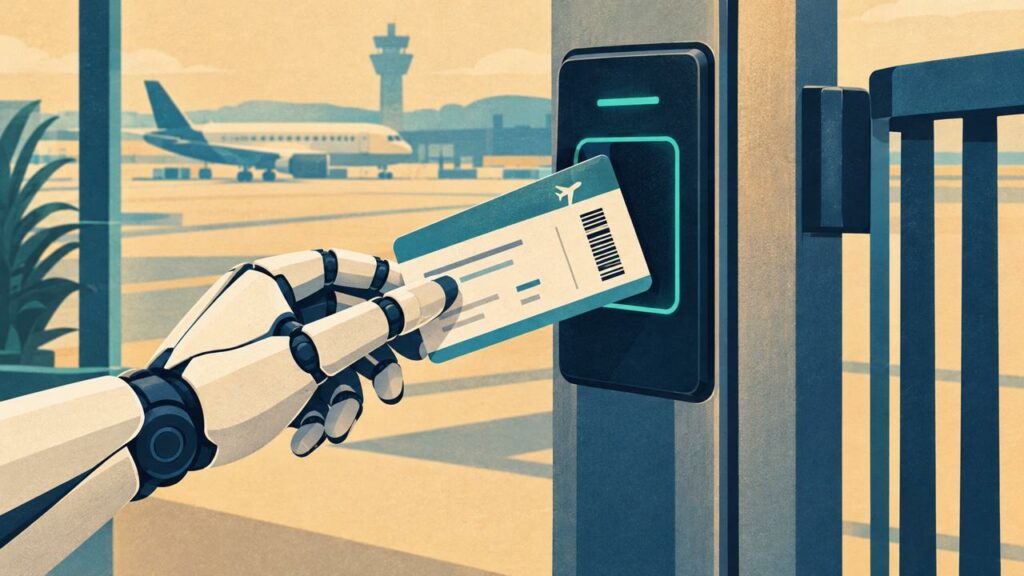
United Airlines says it will block unauthorized third-party AI agents from booking its flights. The airline says that agent use could violate regulations. Shares of Expedia and Booking rose on the news.
Why airlines act first
Airlines control a lot of their own data, fares and customer relationships. They have long fought to keep control of how their flights are sold. An AI agent that books for a traveler without the airline’s permission skips the airline’s own channels, and it may bypass terms that the airline sets.
Why online travel agencies gained
Investors may see licensed intermediaries as safer. A travel agency that has contracts and technical connections with suppliers may be the approved route, while unapproved AI tools get shut out. That could slow the rise of open AI booking agents.
The question for hotels
Hotels will face the same choice. Should they let AI agents read rates and book rooms on behalf of guests? Or guard the data?
- Open approach. Easy to read and book, more visibility inside AI tools, but less control over price display and guest data.
- Guarded approach. More control, but a risk of being left out of an important new channel.
- Middle path. Work through approved partners and official connections, with clear rules on data and fees.
What to do now
Clean up rates, availability and policy data so that they are accurate in one place. Decide who is allowed to use them and on what terms. Read agreements with your booking partners for clauses on automated access.
AI agents are becoming a real booking channel. The hotels that set their policy early will not have to react when guests start to ask for it.
What the airline is actually protecting
An airline sells a product that is tightly controlled: seats, fares, change rules and customer data. When an unauthorized third-party agent books on a traveler’s behalf, the airline loses control over who the customer is, what they are told and how problems are handled. If something goes wrong, such as a wrong date, a wrong name or a fare rule that was misunderstood, the airline may still have to deal with the complaint.
United’s stated position includes a regulatory concern. Whether or not that holds up, the commercial reason is clear: the airline wants to decide who sells its inventory and under what terms.
Why the market reacted
Shares of the large online travel agencies rose on the news. Investors read it as a sign that suppliers will keep distribution channels formal and controlled, and that established intermediaries with existing agreements are better placed than new AI agents. Whether that reading is correct depends on how the story develops.
Why hotels are in a different position
Hotels have thousands of independent owners, many different systems and many channels. Controlling access is harder. Hotels often welcome every route to the guest, since empty rooms earn nothing. But the same questions apply. Who is booking? On what terms? With which rates? Who owns the relationship with the guest afterwards?
Questions to answer before an AI agent knocks
- Rate parity and fairness. If an agent shows your rates, are they accurate and current?
- Cancellation and change rules. Are they shown clearly to the traveler?
- Guest data. Who gets the guest’s details, and under what privacy terms?
- Payment. Who is the merchant of record, and who handles disputes?
- Brand presentation. Are your photos, descriptions and policies shown as you intended?
What to do now
- Fix your data. Accurate descriptions, amenities, photos and policies on your own site and in your listings are what any agent will read.
- Review your terms. Check whether your distribution contracts say anything about automated booking and resale.
- Stay close to your technology providers. Ask your booking engine and channel manager vendors about their plans for agent traffic.
- Watch the legal picture. Rules on automated booking and consumer protection are still forming.
- Decide your position. Welcome agents under agreed terms, or restrict them. Make it a choice, not an accident.
The takeaway
Airlines tend to move first on distribution questions because their inventory is simple and tightly controlled. Hotels will face the same issues with more complexity. Owners who prepare now, with clean data and clear policies, will have more choices when AI booking tools grow in use.




More Stories
Booking Holdings’ AI Agent Vayo Can Now Reserve Hotels and Flights
Spire Hospitality Launches AI-Driven Strategic Asset Performance Division for Hotel Owners
Hilton, Accor, Wyndham CEOs Split on AI Jobs as Voice Agents Lift Hotel Bookings