









American Airlines has fully resumed U.S. flight operations after a critical technology outage triggered a temporary nationwide ground stop, disrupting travel plans for thousands of passengers across the country. The unexpected systems failure briefly halted departures throughout the airline’s domestic network, creating widespread delays, long airport queues, missed connections, and significant rebooking challenges during one of the busiest travel periods of the day.
The disruption highlighted just how heavily modern air travel depends on reliable digital infrastructure. Even a relatively short technology failure can have a cascading effect across an airline’s network, impacting aircraft departures, crew scheduling, baggage handling, passenger check-in, boarding processes, and connecting flights at major hubs.
Technology Failure Triggers Nationwide Ground Stop
The Federal Aviation Administration (FAA) issued a nationwide ground stop after American Airlines reported an IT-related issue affecting connectivity within some of its operational systems. As a precaution, departing flights were temporarily held on the ground while technical teams worked to restore affected systems and ensure flight operations could safely resume.
Once the technology issue was resolved, American Airlines confirmed that its systems had returned online and departures gradually resumed across its U.S. network. Although the ground stop lasted for a relatively short period, the operational impact continued well beyond the restoration of service as airlines worked to reposition aircraft, crews, and passengers.
Passengers Face Delays and Travel Disruptions
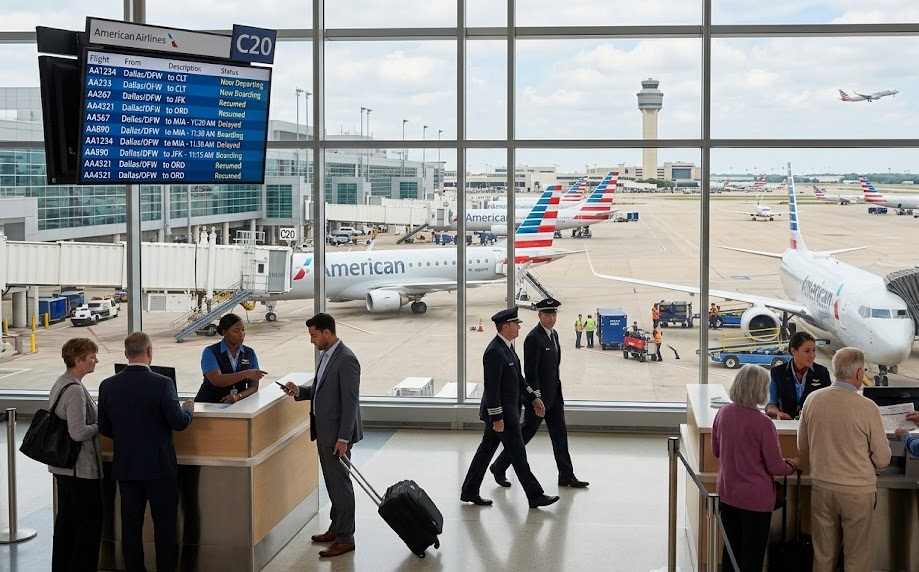
The outage immediately affected travelers at airports across the United States, with hundreds of flights experiencing delays while aircraft remained at departure gates awaiting clearance.
Passengers encountered several challenges, including:
- Extended departure delays across multiple airports.
- Missed connecting flights due to schedule disruptions.
- Longer wait times at customer service and rebooking counters.
- Baggage handling delays as airport operations adjusted to changing flight schedules.
- Last-minute itinerary changes for travelers attempting to reach final destinations.
For passengers traveling on tight schedules or connecting through major hubs, even brief operational interruptions created significant inconvenience that continued long after flights resumed.
Weather Added Further Operational Pressure
Compounding the situation, severe thunderstorms affecting parts of the U.S. East Coast created additional challenges for flight operations. Weather-related restrictions, combined with the temporary technology outage, placed extra pressure on scheduling teams attempting to restore normal service while minimizing further disruptions.
Airlines frequently face operational challenges from weather, but when those conditions coincide with technology issues, recovery becomes more complex as aircraft, crews, and airport resources must all be carefully coordinated.
A Reminder of Aviation’s Digital Dependence
American Airlines operates one of the world’s largest flight networks, with hundreds of departures every day connecting passengers through major hubs such as Dallas-Fort Worth, Charlotte, Miami, Chicago, Phoenix, Philadelphia, Washington, and New York. Because of the scale of these operations, even a brief interruption in critical technology systems can quickly ripple throughout the network.
The incident serves as a reminder that today’s aviation industry relies heavily on sophisticated digital systems to manage every stage of the passenger journey—from ticketing and check-in to aircraft dispatch, crew assignments, baggage tracking, and real-time flight coordination. Maintaining resilient technology infrastructure and rapidly recovering from unexpected outages has become essential for minimizing disruptions and maintaining passenger confidence.
Operations Continue Returning to Normal
While flight operations have resumed, travelers may continue experiencing residual delays as American Airlines works to restore aircraft rotations, reposition flight crews, and accommodate passengers whose journeys were interrupted during the outage. Recovery efforts are expected to continue until normal scheduling patterns are fully re-established across the network.
Passengers are encouraged to monitor their flight status, remain alert for schedule updates, and allow additional travel time while operations continue to stabilize.
Key Takeaways
- American Airlines temporarily halted U.S. departures following a significant technology outage.
- The FAA issued a nationwide ground stop until the airline’s systems were restored.
- Flight operations resumed after technical teams successfully brought systems back online.
- Hundreds of flights experienced delays, causing missed connections and extensive passenger rebooking.
- Severe East Coast thunderstorms added further operational challenges during the recovery.
- The incident demonstrated how quickly technology failures can impact large-scale airline operations nationwide.
Bottom Line
American Airlines has restored normal flight operations following a nationwide technology outage that temporarily grounded departures across the United States. While the airline’s swift recovery helped limit the duration of the disruption, the incident underscores the aviation industry’s growing reliance on robust digital systems. As airlines continue investing in operational resilience, minimizing technology-related disruptions remains essential to maintaining reliable service, protecting passenger confidence, and ensuring the smooth movement of travelers across increasingly complex global air networks.



More Stories
Spire Hospitality Launches AI-Driven Strategic Asset Performance Division for Hotel Owners
Hilton, Accor, Wyndham CEOs Split on AI Jobs as Voice Agents Lift Hotel Bookings
HyperGuest Lands $25M From Apax as Hotel Distribution Bets on Direct Connectivity and AI