









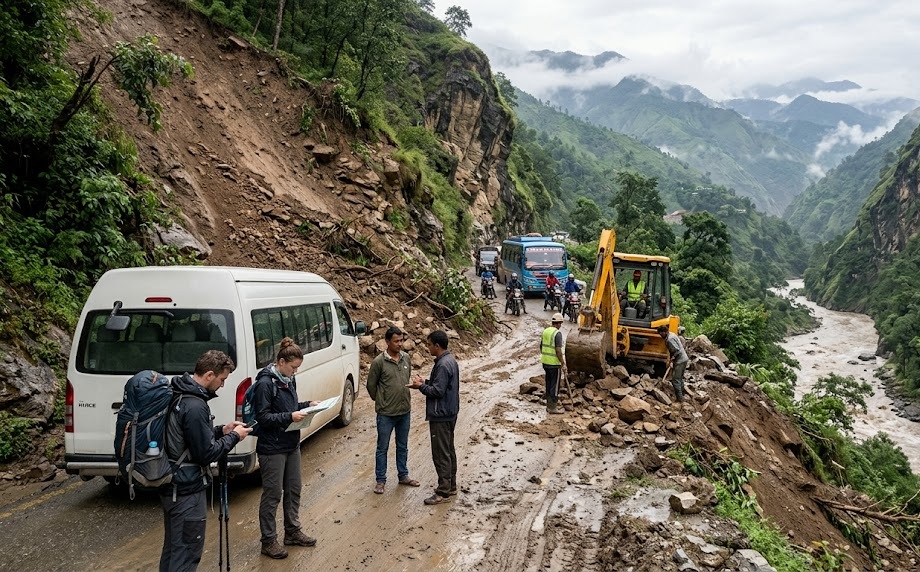
Nepal’s mountain tourism industry is facing continued disruption after severe floods, landslides and debris flows damaged roads, bridges and trekking infrastructure across parts of the country. The most serious impact has been concentrated around Rasuwa and the Langtang corridor, where key access routes were destroyed following the August 26 disaster.
The disruption comes just as Nepal enters its important autumn trekking season, creating uncertainty for trekkers, tour operators and businesses that depend heavily on international visitors. However, the situation is geographically concentrated rather than affecting the entire country, with several major trekking regions continuing to operate.
Langtang Access Remains Severely Disrupted
The Langtang Valley remains one of the areas most affected by the disaster. Roads and bridges connecting Dhunche, Syabrubesi and Langtang were damaged or swept away, leaving communities and trekking gateways difficult to reach by road. Alternative walking routes have also been affected by monsoon damage, while helicopters have become an important option for moving people and supplies.
The damage is particularly significant because Langtang, Gosaikunda and the surrounding Himalayan routes normally attract large numbers of trekkers and pilgrims. The disruption therefore threatens not only transportation but also accommodation providers, guides, porters, restaurants and other tourism businesses along the route.
Manaslu Route Faces Separate Flood Disruption
The problems are not limited to Rasuwa. The Manaslu trekking route in Gorkha was also blocked after flash floods damaged sections of the trail and crossings in early September. Local residents later restored access through a temporary bridge, but authorities and trekking operators have continued to monitor conditions carefully.
This highlights a wider challenge for Nepal’s trekking industry: even when a trail itself remains passable, bridges, roads and river crossings can become vulnerable during the monsoon season. Trekkers may therefore face changing conditions between the time they book a trip and the time they actually arrive.
Nepal’s Tourism Map Is Not Entirely Closed
Despite the headlines, the disruption does not mean that all of Nepal’s trekking destinations have been affected. The Trekking Agencies’ Association of Nepal (TAAN) reported that several major trekking destinations remain largely safe, although access routes in affected corridors continue to present challenges.
The Everest and Annapurna regions, for example, are geographically separate from the main flood-affected corridor. Other destinations across Nepal are also continuing tourism activities, meaning travellers should check the specific route and access road rather than treating the entire country as a single affected zone.
This distinction is becoming increasingly important for Nepal’s tourism sector, as uncertainty surrounding the disaster has contributed to cancellations even in destinations that were not directly affected.
Autumn Trekking Season Faces a Critical Test
September marks the beginning of one of Nepal’s most important periods for mountain tourism. As weather conditions generally improve after the monsoon, international trekkers traditionally arrive for journeys through the Himalayas.
The current disruption could therefore have an outsized economic effect on mountain communities. Hotels, trekking agencies, guides, porters, transport operators and local shops all depend on the steady flow of visitors during the autumn months.
Nepal’s tourism authorities and industry representatives have been working to communicate that many destinations remain accessible, while encouraging travellers to verify conditions before travelling. The objective is to avoid unnecessary cancellations without encouraging visitors to enter areas where infrastructure remains unsafe.
Roads and Bridges Are the Biggest Challenge
For many trekking destinations, the biggest problem is not necessarily the condition of the mountain trails themselves but getting to the trailhead.
The August disaster destroyed sections of roads and bridges along the Bhotekoshi and Trishuli corridors, creating major transportation problems toward Langtang and the Nepal-China border. The damage has also isolated communities that rely on these routes for tourism, trade and everyday supplies.
With the autumn season underway, repairing these connections has become an important priority. Until permanent infrastructure is restored, travellers may need alternative routes, additional travel time or different transportation arrangements.
Travellers Need Route-Specific Information
The current situation makes preparation particularly important for anyone planning a Nepal trekking holiday. Travellers should confirm road conditions, trail accessibility, bridge status and local travel advisories shortly before departure rather than relying solely on older itineraries.
For routes around Langtang, Rasuwa, Syabrubesi and the Tibet border, conditions can change rapidly following further rainfall or landslides. At the same time, travellers heading to unaffected regions should avoid assuming that disruption in one district automatically means their entire Nepal itinerary needs to be cancelled.
Key Takeaways
- Langtang and Rasuwa remain among the areas most affected by flood and landslide damage, with roads and bridges severely disrupted.
- The Manaslu trekking route has also experienced separate flood-related disruption and infrastructure damage.
- Several major trekking destinations remain accessible, with TAAN reporting that much of Nepal’s trekking infrastructure outside the affected corridors remains operational.
- The disruption comes during Nepal’s crucial autumn trekking season, increasing pressure on tourism businesses and mountain communities.
- The main challenge for affected routes is often transport access to trailheads, rather than the condition of every trekking trail.
- Travellers should check specific route conditions before departure instead of assuming that all of Nepal has been affected.
- The recovery of roads, bridges and tourism infrastructure will be important for restoring confidence in affected Himalayan destinations.
Bottom Line
Nepal’s latest floods and landslides have created a serious disruption for Langtang, Rasuwa and several other trekking corridors, just as the country enters its peak autumn tourism period. However, the impact is geographically concentrated, and major destinations elsewhere in Nepal continue to receive travellers. The immediate priority is restoring damaged infrastructure while providing clear, route-specific information so visitors can distinguish between areas that remain inaccessible and those that are still operating.



More Stories
GIC Acquires 16 Marriott-Operated Hotels in Japan for About $800 Million Amid Tourism Boom
HVS: U.S. Hotel RevPAR Up Over 10% Mid-September as Nearly 1,000 Hotels Sold in H1 2026
Choice Hotels to Acquire Harvest Hosts for ~$130M, Expanding Into RV and Outdoor Travel