












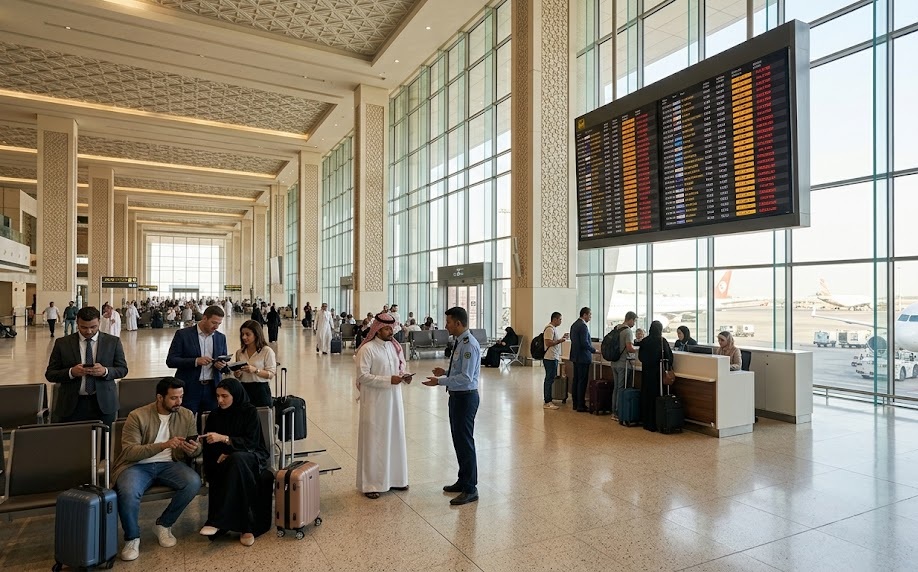
Air travel across Asia faced widespread disruption on 13 October 2026, with approximately 1,599 flight cancellations and 4,424 delays reported across major airports. The disruption affected travellers in Saudi Arabia, China, India, Thailand, Indonesia and other parts of the region, leaving passengers facing missed connections, extended airport waits and unexpected changes to their itineraries.
The situation reflects several overlapping challenges. Security concerns and airport closures have severely affected parts of the Middle East, while weather conditions and operational pressures have contributed to difficulties at some Asian airports. For international travellers, the impact can extend well beyond the airport where a disruption first occurs, particularly when flights depend on connecting services and tightly coordinated airline schedules.
Saudi Arabia Faces The Most Severe Cancellations
Saudi Arabia was among the hardest-hit areas, with Riyadh and Jeddah experiencing substantial disruption following attacks on aviation infrastructure and heightened regional security concerns.
King Khalid International Airport in Riyadh became a major focus after authorities suspended operations. According to reporting published on 13 October, the airport was expected to remain closed until 17 October while safety and operational assessments continued. Several international airlines subsequently suspended or cancelled services to Saudi destinations.The impact extends beyond Riyadh. Jeddah, Dammam and Madinah have also experienced flight changes, affecting travellers heading to Saudi Arabia for business, family visits, religious travel and other purposes. Passengers should confirm their specific flight status rather than assume that every airport or route is operating under identical restrictions.
India’s Major Airports Experience Delays
India’s aviation network has also experienced significant pressure, particularly at major international gateways. Airports in Delhi, Mumbai, Bengaluru and Hyderabad have recorded delays and cancellations during the broader period of disruption.
These airports are important links between South Asia, the Gulf and destinations across East and Southeast Asia. When services connecting India with Saudi Arabia and other Gulf markets are suspended, passengers can face missed onward flights, longer journeys and difficulties securing replacement seats.
Airlines including IndiGo, Air India and Akasa Air have adjusted services to Saudi Arabia amid security concerns. Passengers with connecting itineraries should confirm that their entire journey remains valid before leaving for the airport.
China’s Major Aviation Hubs Face Operational Pressure
China’s extensive domestic and international aviation network is another important part of the regional picture. Airports serving Shanghai, Beijing, Guangzhou and Shenzhen have reported delays and cancellations, adding pressure to an already complex network of domestic connections and international services.
Even relatively small disruptions at major hubs can have wider consequences. Aircraft arriving late may miss their next scheduled departure, while crew availability and airport congestion can create additional delays throughout the day.
However, the reported figures represent operational disruptions rather than proof that all affected flights experienced the same cause. Individual flight conditions depend on the airport, airline, weather and schedule.
Weather Adds To Southeast Asia’s Challenges
In parts of Southeast Asia, heavy rain, thunderstorms and poor visibility have added another layer of uncertainty. Airports in Thailand, Indonesia and the Philippines have faced operational challenges associated with difficult weather conditions.
Indonesia has also experienced visibility problems associated with smoke from wildfires in some areas. Such conditions can affect aircraft movements and require operational adjustments when visibility or other safety parameters fall below acceptable levels.
These weather-related problems are separate from the security-driven disruption in Saudi Arabia. Nevertheless, when several regions experience operational difficulties simultaneously, finding alternative routes and replacement flights can become more challenging for travellers.
Airlines Adjust Schedules Across The Region
Airlines operating across Asia must continually balance aircraft availability, crew schedules, airport restrictions and passenger demand. A cancellation at one airport can affect later services elsewhere if an aircraft or crew cannot reach its next destination on time.
The current disruption has placed additional pressure on carriers serving the Middle East and Asian markets. Some airlines have suspended particular routes for safety reasons, while others are managing delays and changing schedules as operating conditions evolve.
For passengers, this means that flight information can change even after a booking has been confirmed. Travellers should monitor notifications from their operating airline and check every segment of a connecting journey before departure.
Passengers Face Missed Connections And Extra Costs
The consequences of widespread disruption go beyond waiting at departure gates. Travellers may miss connecting flights, lose prepaid hotel nights or need to rearrange airport transfers and onward transportation.
Passengers whose flights are cancelled should contact their airline or travel agent to discuss available alternatives. Depending on the ticket conditions and applicable passenger-protection rules, options may include rebooking, refunds or assistance with necessary expenses.
Travellers should also retain boarding passes, booking confirmations and receipts for additional costs. Those considering alternative routes through another country should check transit visa requirements and ensure that replacement flights are confirmed before making additional arrangements.
Travel Planning Becomes More Important
The disruption highlights the importance of flexibility when travelling through major Asian and Middle Eastern hubs. Passengers with urgent commitments may benefit from allowing additional connection time where possible and avoiding unnecessarily tight transfers during periods of instability.
Travellers should check official airline and airport updates immediately before leaving for the airport. Those travelling to or through Saudi Arabia should also consult the latest government travel advice and confirm whether their particular route is operating.
A regional disruption does not mean every Asian airport or airline is affected equally. Checking the exact route, flight number and connection arrangements is more useful than relying on regional cancellation totals alone.
Key Takeaways
- Approximately 1,599 flights were cancelled and 4,424 delayed across the reported Asian aviation network on 13 October 2026.
- Riyadh and other Saudi airports faced severe disruption linked to airport closures and heightened security concerns.
- Major Indian hubs, including Delhi, Mumbai, Bengaluru and Hyderabad, experienced operational pressure during the broader disruption.
- Airports serving Shanghai, Beijing, Guangzhou and Shenzhen also reported delays and cancellations.
- Heavy rain, thunderstorms and poor visibility contributed to operational challenges in parts of Southeast Asia.
- Airlines including IndiGo, Air India and Akasa Air adjusted services to Saudi destinations amid security concerns.
- Travellers may face missed connections, extended waits, rebooking requirements and unexpected expenses.
- Passengers should check airline notifications, confirm onward connections and review applicable refund or rebooking options before making alternative arrangements.
Bottom Line
Asia’s aviation network is facing a combination of security-related disruption, airport restrictions, adverse weather and operational pressure in October 2026. Saudi Arabia has experienced particularly severe cancellations, while major airports elsewhere in Asia have reported delays affecting domestic and international journeys. The scale of disruption makes careful planning essential, but conditions vary significantly by route. Travellers should rely on current airline and airport information, confirm connecting services and remain prepared for schedule changes until operations stabilise.




More Stories
Brazil And Argentina Power September Travel Growth
Switzerland Tops The World’s Most Expensive Nightlife Destinations
Australia Tightens Student Visa Rules For International Students