










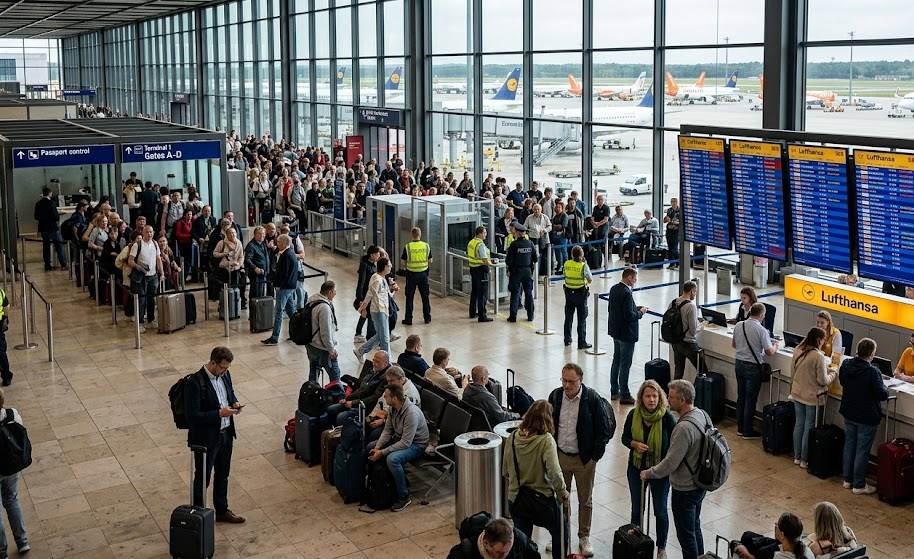
Air travel across Europe is facing another difficult period as 113 flights have been cancelled and 2,141 delayed, creating disruption for passengers travelling through Berlin and 11 other major airports. The latest figures underline the pressure still affecting Europe’s aviation network as airlines and airports manage heavy traffic, weather-related constraints and operational bottlenecks.
The disruption comes at the end of an exceptionally busy summer for European aviation. EUROCONTROL reported that traffic during late August remained 2.3% above the same week in 2025, while Friday, August 28 alone experienced more than 200,000 minutes of weather-related air-traffic-management delays.
Berlin Among Airports Feeling the Pressure
Berlin Brandenburg Airport (BER) is among the airports being closely watched by travellers as delays and cancellations affect schedules across the continent. Current airport information shows a busy departure programme, with flights operating through both Terminal 1 and Terminal 2 and passengers advised to allow sufficient time for check-in and security.
Berlin’s connectivity makes disruptions particularly significant. The airport serves a wide range of European destinations, including major hubs such as Amsterdam, Paris, Madrid, London, Rome and Munich. When flights arrive late or aircraft and crews are displaced by earlier disruptions, knock-on delays can quickly spread across subsequent services.
11 Other Airports Also Reporting Disruptions
The wider European picture shows that the problem is not isolated to Germany. Current disruption data lists airports including Madrid-Barajas, Paris Charles de Gaulle, Athens, London Gatwick, Cologne Bonn, Leipzig/Halle, Dublin, Barcelona, Manchester and Frankfurt among airports experiencing delays or cancellations.
At several airports, delays are affecting a noticeable share of scheduled flights. Leipzig/Halle, for example, recorded delays affecting around half of its listed departures in the latest disruption snapshot, while Cologne Bonn also showed a substantial proportion of delayed services.
The figures can change rapidly during the day as flights depart, are rescheduled or are cancelled, meaning passengers should check their individual flight status rather than relying solely on airport-wide statistics.
Weather Continues to Be a Major Disruption Factor
One of the strongest contributors to European aviation disruption this summer has been severe weather. EUROCONTROL’s latest weekly assessment found that weather was responsible for more than 200,000 minutes of en-route air-traffic-management delay on August 28. Overall network ATFM delay rose to 4.25 minutes per flight during the week, 23% higher than the previous week.
Thunderstorms and other severe weather conditions can have effects far beyond the airports directly experiencing them. Airspace restrictions can force aircraft to take longer routes, reduce the number of flights that can safely operate and create queues that continue even after weather conditions improve.
This means a passenger departing from Berlin, Frankfurt or Paris can experience a delay even when skies at their own airport appear relatively normal.
Europe’s Busy Air Network Leaves Little Room for Recovery
European aviation is operating at extremely high volumes. EUROCONTROL recorded an average of 36,581 flights per day during the latest reporting week, with traffic 2.3% higher than the equivalent period last year. The organization also expects September Friday traffic peaks of between 37,000 and 37,500 flights.
That level of activity creates a delicate operating environment. A relatively small disruption can affect aircraft rotations, crew schedules and connecting passengers throughout the day.
For travellers with tight connections, the consequences can be particularly serious. Missing one flight can lead to hours of additional waiting, especially when the next available service is already heavily booked.
New Border Controls Add Another Layer of Risk
European travellers are also dealing with challenges connected to the rollout of the EU’s Entry/Exit System (EES). The electronic border system requires eligible non-EU travellers to provide biometric information, including photographs and fingerprints.
Airline industry representatives say missed connections increased significantly during the summer because passengers faced lengthy queues at some European border-control points. Some carriers reported substantially higher numbers of passengers missing connecting flights, with technology problems and staffing shortages contributing to congestion.
The issue is particularly important at major European hubs, where passengers may have limited time between connecting flights and must sometimes pass through additional immigration procedures.
What Passengers Should Do
Travellers flying through Berlin, Frankfurt, Paris, Madrid, Amsterdam and other affected airports should check their flight status before leaving for the airport and again shortly before boarding.
Passengers with connecting flights should also avoid assuming that a delayed first leg will automatically result in a protected connection. Those facing significant delays or cancellations should contact their airline as soon as possible to understand rebooking options and any available passenger-rights protections.
At Berlin Brandenburg, the airport specifically advises passengers to allow sufficient time even when travelling with only hand baggage and to proceed to security immediately after check-in.
Disruption Could Continue Into September
The latest figures suggest that Europe’s aviation network is entering September with little spare capacity for major disruptions. Passenger demand remains strong, traffic levels are high and weather can still create sudden restrictions.
With 37,000-plus flights expected on peak Fridays, even relatively modest operational problems could continue to produce cascading delays across multiple countries.
For passengers, the biggest lesson is that disruption at one European airport can quickly become a network-wide problem. A delayed aircraft in one city can affect the next destination, while missed connections and limited replacement capacity can extend travel problems well into the following day.
Key Takeaways
- 113 flights have been cancelled and 2,141 delayed across the latest European airport disruption figures.
- Berlin Brandenburg Airport is among the airports facing operational pressure as busy European schedules continue.
- Airports including Madrid, Paris, Athens, London Gatwick, Cologne, Leipzig, Dublin, Barcelona, Manchester and Frankfurt are also showing delays or cancellations.
- Severe weather remains a major contributor, with more than 200,000 minutes of weather-related air-traffic-management delays recorded on August 28.
- European aviation traffic remains extremely high, averaging 36,581 flights per day in the latest EUROCONTROL reporting week.
- The EU Entry/Exit System is adding another potential source of congestion for some international travellers, particularly at major connecting airports.
- Passengers should check their individual flight status, allow extra time at the airport and plan carefully when travelling with tight connections.
Bottom Line
Europe’s latest flight disruption highlights how tightly connected the continent’s aviation network has become. 113 cancellations and 2,141 delays may be spread across different airports, but weather restrictions, high traffic volumes, border-control queues and limited recovery capacity can allow problems to cascade quickly. With September traffic expected to remain exceptionally busy, travellers through Berlin and other major European hubs should expect schedules to remain vulnerable to further delays and check their flights closely before travelling.



More Stories
Belgians Could Get Faster US Airport Entry By End Of 2026
Flights Cancelled Across Europe As Rome, Catania And More Face Disruption
FAA Fines Unruly Airline Passengers $1.5 Million in 2026