










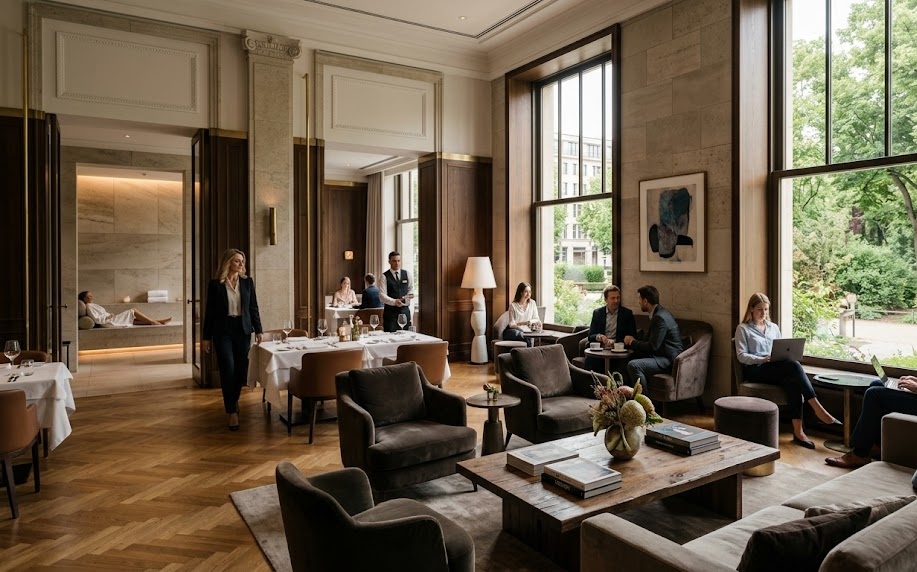
Berlin is preparing to welcome a new chapter in its luxury hospitality landscape as SO/ Berlin Das Stue is set to become Sofitel Berlin Das Stue in the first quarter of 2027. The transformation will bring the distinctive boutique property into Sofitel’s global luxury collection while preserving the historic identity, architecture and design character that have made Das Stue one of Berlin’s notable high-end hotels.
Located beside Tiergarten and the Berlin Zoological Garden, the 78-room property combines a historic setting with contemporary interiors, creating a hotel experience that is closely connected to Berlin’s cultural and natural surroundings. The upcoming rebranding is expected to strengthen Sofitel’s luxury presence in Germany while giving the hotel a new international platform.
From Royal Danish Embassy to Luxury Hotel
The hotel’s character begins with its building. The property occupies a heritage-protected neoclassical building dating from the 1930s, originally constructed as the Royal Danish Embassy. Its name, “Das Stue,” means “living room” in Danish and reflects the building’s diplomatic history.
That history will remain an important part of the hotel’s identity after the transition to Sofitel. Rather than replacing the property’s personality, the planned transformation is designed to combine its Danish heritage and Berlin setting with Sofitel’s French art de vivre and luxury hospitality.
A Boutique Experience in the Heart of Berlin
With just 78 rooms and suites, Das Stue offers a more intimate alternative to Berlin’s larger luxury hotels. Its location provides an unusual combination of urban access and tranquillity, with the hotel positioned directly beside Tiergarten and overlooking parts of the Berlin Zoo. Some rooms even offer views toward the zoo’s animal enclosures.
The setting gives the property a distinctive advantage for travellers seeking a luxury stay without being surrounded by the intensity of a busy city-centre environment. Guests can move from Berlin’s museums, cultural institutions and diplomatic quarter into a quieter hotel environment within minutes.
Design Remains at the Centre
The property’s contemporary interiors were originally developed by Axthelm Rolvien Architekten and designer Patricia Urquiola, combining the building’s historic architecture with sophisticated residential-style spaces. Art and sculptural elements also play a major role throughout the hotel, reinforcing its identity as a design-focused luxury property.
The Sofitel transition will introduce carefully selected enhancements rather than an entirely new concept. Planned improvements include guestroom upgrades, enhanced bedding and soft furnishings, refreshed public areas, corridor renovations and a redesigned lobby experience featuring new artistic and decorative elements.
Luxury Extends Beyond the Rooms
The property is designed as more than a place to sleep. Its facilities include a heated indoor swimming pool, spa, fitness facilities, meeting spaces and dining venues, creating a complete luxury experience for both leisure and business travellers.
The hotel’s dining and social spaces are another important part of its identity. Its restaurant and bar combine contemporary hospitality with the property’s artistic atmosphere, while the spa provides a quieter wellness environment within the city. These elements allow the hotel to function as a destination in its own right rather than simply a base for exploring Berlin.
Sofitel Brings French Luxury to Berlin
The transition will introduce Sofitel’s international luxury positioning while retaining the individuality of Das Stue. The concept is built around a dialogue between French elegance, Danish heritage and Berlin’s contemporary cultural identity.
This combination reflects a wider direction in luxury hospitality, where travellers increasingly look for hotels that offer a strong sense of place. Instead of standardised luxury, properties with historic architecture, local design influences and distinctive experiences can provide a more memorable connection to the destination.
A Strategic Move for Sofitel in Germany
The arrival of Sofitel Berlin Das Stue is also part of a wider expansion strategy. Accor currently operates nearly 300 hotels and more than 43,000 rooms across Germany, with approximately 30 additional projects in development. The company describes Germany as one of its core European markets.
Adding a recognised boutique luxury address in Berlin gives Sofitel another presence in one of Europe’s major cultural capitals. It also places the brand alongside a city tourism market increasingly focused on luxury accommodation, cultural travel, design, gastronomy and high-value visitor experiences.
Berlin’s Luxury Tourism Profile Continues to Evolve
Berlin has traditionally been associated with history, art, nightlife and creative culture, but its luxury hospitality offering has continued to diversify. The city now has a range of high-end hotels offering design-led accommodation, fine dining, wellness and heritage experiences.
Sofitel Berlin Das Stue fits into this evolving market by combining an historic landmark setting with contemporary design and international luxury standards. Its location near Tiergarten and the zoo also provides a different proposition from luxury properties positioned directly in Berlin’s busiest commercial districts.
Key Takeaways
- SO/ Berlin Das Stue will become Sofitel Berlin Das Stue in Q1 2027, joining Sofitel’s global luxury hotel collection.
- The property features 78 rooms and suites and occupies a protected former Royal Danish Embassy building dating from the 1930s.
- Its location beside Tiergarten and Berlin Zoo gives guests a combination of central-city access, greenery and distinctive views.
- The hotel combines Danish heritage, contemporary design and Sofitel’s French art de vivre.
- Planned upgrades include refreshed guestrooms, improved furnishings, renovated public areas and a redesigned lobby.
- Facilities include a spa, indoor heated pool, fitness centre, meeting spaces and dining venues.
- The transition strengthens Sofitel’s presence in Germany and adds another distinctive luxury property to Berlin’s hospitality market.
- Accor has nearly 300 hotels and more than 43,000 rooms in Germany, with around 30 projects in development.
Bottom Line
Sofitel Berlin Das Stue represents a carefully positioned evolution of one of Berlin’s distinctive boutique luxury hotels. By preserving its former diplomatic identity, architectural heritage and design character while introducing Sofitel’s French luxury standards, the property is set to offer an experience built around history, individuality and contemporary hospitality. When the transition takes place in 2027, it will add another internationally recognised luxury address to Berlin while maintaining the unique character that has defined Das Stue.


More Stories
GIC Acquires 16 Marriott-Operated Hotels in Japan for About $800 Million Amid Tourism Boom
Spire Hospitality Launches AI-Driven Strategic Asset Performance Division for Hotel Owners
HVS: U.S. Hotel RevPAR Up Over 10% Mid-September as Nearly 1,000 Hotels Sold in H1 2026