









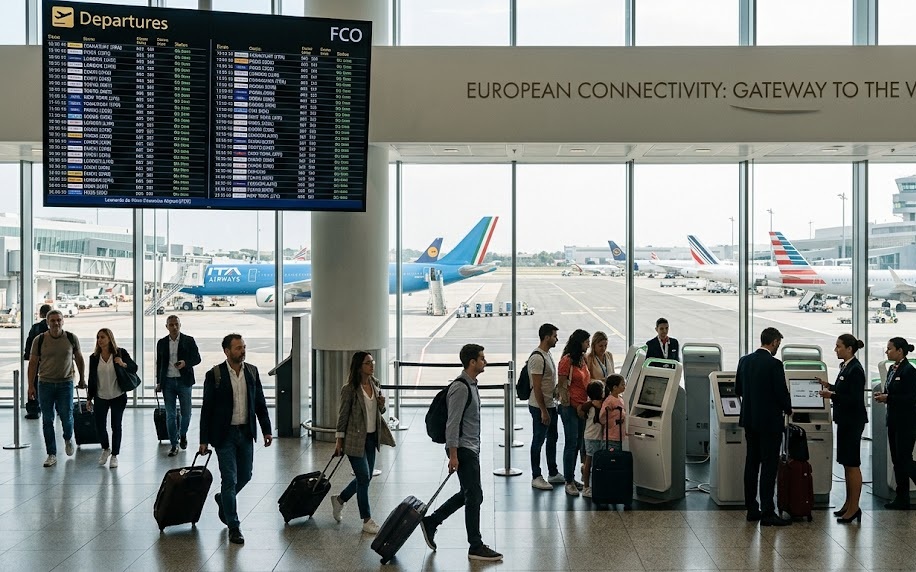
A New Era for European Travel
Europe’s travel sector is entering a decisive new phase, driven by the sheer scale of 452 million EU residents whose mobility, spending and demand for connectivity are reshaping the continent’s aviation and tourism landscape. This is no longer just about recovery from the pandemic; it is about a deeper transformation where European cities, airports and destinations are positioning themselves as global gateways for business, leisure, culture and long‑haul travel. Germany, France, Italy, Spain, the Netherlands and other key economies are at the center of this shift, with Frankfurt, Paris and Rome emerging as the three most influential aviation hubs in Europe.
Germany, France and Italy: The Power Trio of European Travel
Germany, France and Italy are standing together as the core of Europe’s travel transformation, each bringing distinct strengths:
- Germany leverages its industrial base, central location and strong domestic demand, with Frankfurt acting as Europe’s most important long‑haul and intercontinental hub.
- France combines cultural prestige, luxury tourism and a global business network, with Paris serving as a primary gateway to Europe and Africa.
- Italy brings historic appeal, coastal destinations and a growing share of high‑end leisure and wellness travel, with Rome expanding as a southern European hub connecting Europe, the Middle East and North Africa.
Together, these three nations anchor a network of airlines, airports and tourism operators that is increasingly oriented toward global connectivity rather than just regional traffic.
452 Million EU Residents: The Engine Behind Growth
The 452 million EU residents represent the single largest source of intra‑European and outbound travel demand in the world. Their mobility is fueled by:
- Higher disposable incomes and a growing willingness to travel for both leisure and business.
- Improved visa and border arrangements that make cross‑border travel easier and more predictable.
- Digital tools and loyalty programs that simplify booking, reward repeat travel and encourage multi‑destination trips.
This demographic is driving airport passenger growth across Frankfurt, Paris, Rome and other major hubs, while also supporting a wave of tourism expansion in secondary cities, regional airports and coastal destinations that were previously overshadowed by the big capitals.
Global Connectivity Frankfurt, Paris and Rome
The three aviation hubs are rapidly expanding their global reach:
- Frankfurt is deepening its role as Europe’s primary long‑haul gateway, with new routes to Asia, the Middle East, the Americas and Africa.
- Paris is strengthening its position as a bridge between Europe, Africa, North America and the Middle East, with a focus on high‑value business and leisure traffic.
- Rome is expanding its southern European and Mediterranean connections, while also growing its long‑haul network to Africa, Asia and the Americas.
These hubs are not just moving passengers; they are enabling global business networks, cultural exchange and tourism flows that tie Europe more closely to the rest of the world. The result is a travel ecosystem where Germany, France, Italy and other leading destinations are increasingly seen as essential nodes in a global network, rather than just regional players.
Key Points
- 452 million EU residents are the core driver of Europe’s airport passenger growth and tourism expansion.
- Germany, France and Italy form the power trio of European travel, with Frankfurt, Paris and Rome as the main aviation hubs.
- Frankfurt is Europe’s leading long‑haul and intercontinental gateway, with expanding routes to Asia, the Americas and Africa.
- Paris serves as a global bridge between Europe, Africa, North America and the Middle East, focused on high‑value traffic.
- Rome is growing as a southern European hub, connecting Europe with the Mediterranean, Africa, Asia and the Americas.
- The transformation is shifting Europe from regional recovery to global connectivity, making its leading destinations essential nodes in worldwide travel networks.
Bottom Line
Europe’s travel transformation has entered a new era driven by 452 million EU residents, with Germany, France and Italy standing together as the continent’s leading destinations. Frankfurt, Paris and Rome are emerging as the three most influential aviation hubs, fueling massive airport passenger growth, tourism expansion and global connectivity. This shift is moving Europe from a regional recovery story to a global connectivity model, where these destinations become essential nodes in worldwide travel networks, linking Europe more closely with the rest of the world for business, leisure and cultural exchange.




More Stories
Nepal Landslides Disrupt Tourist And Trekking Routes
Italy And Germany Help France Target Record Tourism Revenue
US, Canada And Mexico Reveal A Tourism Spending Divide