










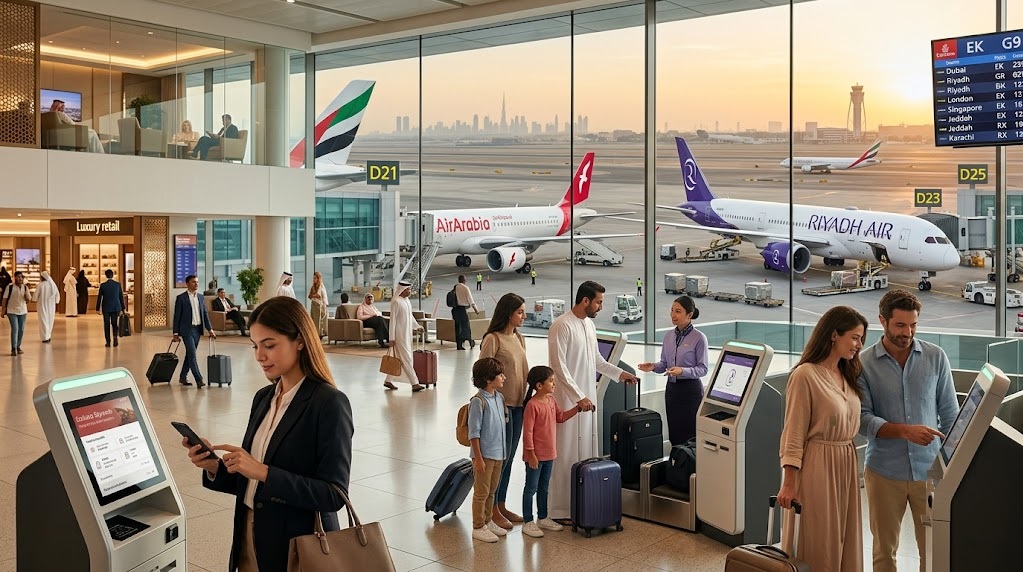
The Gulf aviation industry is entering a new phase of competition in 2026, with leading carriers Emirates, Air Arabia, and Riyadh Air shifting their focus beyond ticket prices to deliver a more customer-centric travel experience. Rather than competing solely on offering the lowest fares, airlines are investing in greater booking flexibility, enhanced loyalty rewards, seamless digital services, and expanding international route networks to attract and retain passengers.
This strategic shift reflects changing traveler expectations. Today’s passengers are looking for more than affordable flights—they want confidence when booking, the ability to adjust travel plans without excessive penalties, meaningful rewards for frequent travel, and a smooth end-to-end journey. Airlines that can provide these benefits are increasingly gaining a competitive advantage in both regional and international markets.
Passenger Experience Becomes the New Competitive Advantage
As global travel continues to evolve, customer experience is emerging as one of the most important factors influencing airline choice. Travelers are increasingly valuing airlines that offer convenience, reliability, and flexibility alongside competitive pricing.
To meet these expectations, Gulf carriers are focusing on:
- Flexible booking and rebooking options that reduce uncertainty during travel disruptions.
- Enhanced loyalty programs offering greater value to frequent flyers.
- Digital-first services that simplify booking, check-in, and travel management.
- Expanded route networks connecting passengers to more international destinations.
- Improved onboard and airport experiences that encourage long-term customer loyalty.
By prioritizing these areas, airlines are creating stronger relationships with travelers while differentiating themselves in an increasingly competitive market.
How Leading Gulf Airlines Are Positioning Themselves
Each major carrier is adopting a distinct strategy while contributing to the region’s broader aviation transformation.
Emirates
Emirates continues strengthening its reputation for premium service by emphasizing greater booking flexibility and enhanced passenger protection during operational disruptions. Flexible travel policies provide customers with added confidence when planning international journeys, particularly in an environment where travel conditions can occasionally change unexpectedly.
Air Arabia
Air Arabia remains focused on delivering affordable, value-driven travel while continuing to expand services for budget-conscious passengers. By combining competitive fares with reliable service and an expanding network, the airline continues attracting leisure travelers, families, and regional passengers seeking cost-effective travel options without sacrificing convenience.
Riyadh Air
As one of the region’s newest airlines, Riyadh Air is positioning itself as a premium, digitally driven carrier designed for the next generation of travelers. With a strong emphasis on technology, personalized customer experiences, and modern loyalty offerings, the airline aims to build lasting customer relationships from the very beginning while supporting Saudi Arabia’s growing role in global aviation.
Regional Competition Is Evolving
The Gulf aviation market is no longer defined solely by pricing competition. Instead, airlines are competing across multiple areas that influence the overall passenger experience.
Key competitive priorities now include:
- Building stronger customer loyalty through attractive rewards programs.
- Offering greater flexibility to reduce travel uncertainty.
- Expanding global connectivity through new international routes.
- Leveraging digital innovation to simplify every stage of the journey.
- Creating premium experiences that encourage repeat travel.
This evolution is benefiting not only airlines but also airports, tourism authorities, and hospitality businesses that rely on sustained passenger growth and international connectivity.
Supporting Long-Term Tourism and Economic Growth
As Gulf carriers continue expanding their networks, the region is strengthening its position as one of the world’s most important aviation hubs. Increased connectivity encourages tourism, facilitates international business travel, and improves access to emerging markets across Asia, Europe, Africa, and the Americas.
By combining route expansion with customer-focused services, Gulf airlines are helping stimulate broader economic activity while reinforcing the Middle East’s reputation as a global gateway for international travel.
Looking Ahead
The future of airline competition in the Gulf is expected to revolve around customer trust, operational reliability, digital innovation, and personalized travel experiences. Airlines that successfully combine network growth with flexible policies and rewarding loyalty programs are likely to enjoy stronger passenger retention and sustained long-term growth.
As traveler expectations continue to rise, passenger experience—not just price—is becoming the defining factor that shapes airline choice.
Key Takeaways
- Gulf airlines are moving beyond price competition by prioritizing flexibility, loyalty, and customer experience.
- Emirates is strengthening booking flexibility and passenger protection during disruptions.
- Air Arabia continues expanding its value-driven services for budget-conscious travelers.
- Riyadh Air is building a premium, technology-focused airline centered on digital innovation and customer loyalty.
- Expanded international route networks are strengthening the Gulf’s role as a global aviation hub.
- Customer experience, convenience, and loyalty programs are becoming the primary drivers of competition in regional aviation.
Bottom Line
The Gulf aviation industry is redefining airline competition in 2026 by placing passenger experience at the heart of its growth strategy. With Emirates, Air Arabia, and Riyadh Air investing in greater flexibility, stronger loyalty programs, digital innovation, and expanding global connectivity, the region is moving beyond traditional fare-based competition. The Gulf is reinforcing its position as one of the world’s fastest-growing and most influential aviation markets, where exceptional passenger experience is becoming the new standard for success.



More Stories
GIC Acquires 16 Marriott-Operated Hotels in Japan for About $800 Million Amid Tourism Boom
Choice Hotels to Acquire Harvest Hosts for ~$130M, Expanding Into RV and Outdoor Travel
Hyatt’s Luxury Push Across the Americas Centers on Mexico Park Hyatt Trio and Unbound Growth