











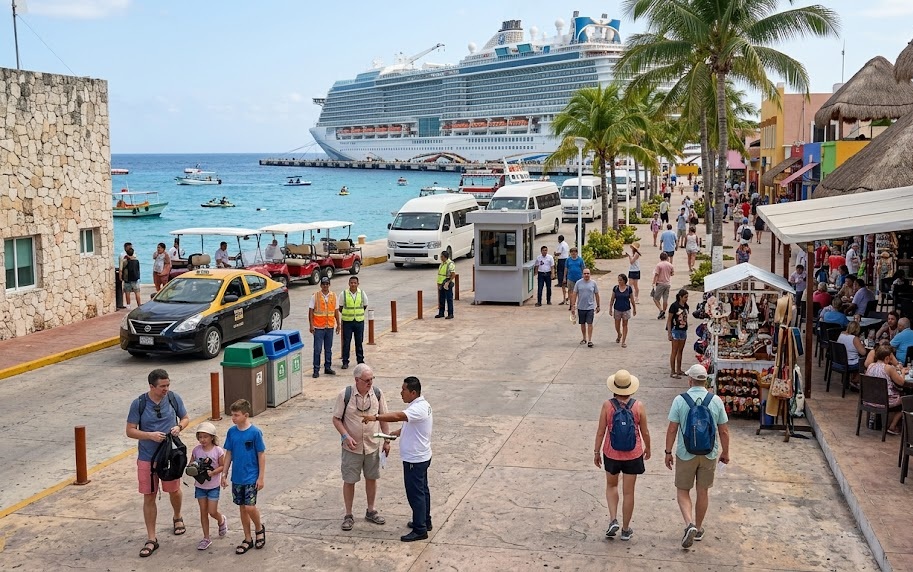
Mexico is experiencing one of its strongest tourism periods in recent years, with international arrivals, overnight tourist numbers and cruise visitation reaching record levels for the first seven months of 2026. Tourism Secretary Josefina Rodríguez Zamora reported, based on INEGI’s International Travelers Survey, that 59.7 million international travellers, including same-day border and cruise visitors, arrived between January and July 2026, 7% more than during the same period in 2025. Of these, 28.9 million were international tourists who stayed overnight, representing a 4.5% increase.
These records cover January to July only, not the full year, and they are not uniform across every channel. DataTur figures show that foreign tourist arrivals by air fell about 5.7% to 12.41 million in January–July 2026, with July air arrivals down about 9.2%, meaning much of the headline growth came from border crossings and cruise passengers.
The growth is strengthening Mexico’s position as one of the world’s major tourism destinations. Rising visitor numbers are being accompanied by expanded air connectivity, stronger cruise activity and growing demand from several international markets, giving destinations across the country another significant year of tourism momentum.
International Tourism Reaches New Highs
Mexico’s tourism performance has been setting records since the beginning of the year. In January 2026 alone, 8.84 million international visitors arrived in the country, the highest figure ever recorded for a January and 10% above January 2025. International tourists reached 4.29 million during the month, while visitor spending reached approximately US$3.48 billion.
By the end of June, Mexico had recorded 51.1 million international travellers, 7.7% more than in the first half of 2025. The first six months also produced a record 24.5 million international tourists and US$18.78 billion in tourism-related foreign-exchange revenue.
Tourism Spending Continues to Support the Economy
Visitor spending remains an important part of Mexico’s tourism story. From January through July, international travellers generated approximately US$21.74 billion, only 0.3% more than the US$21.68 billion recorded in the same period of 2025, according to Sectur and INEGI. With traveller numbers up 7% but spending almost flat, average spend per visitor has declined.
The figures show that Mexico’s tourism expansion is not being measured only by the number of people entering the country. Hotels, restaurants, transportation providers, attractions, tour operators and local businesses are all benefiting from the continued flow of visitors, although the relationship between visitor growth and spending can vary by market and destination.
Air Arrivals Soften at Major Resort Gateways
For hotels, the channel mix matters. Air arrivals of foreign tourists from the United States, Mexico’s largest source market, fell about 10% in January–July 2026, and international air arrivals declined at key resort gateways including Cancún (-5.7%), Los Cabos (-7.8%) and Puerto Vallarta (-21.1%), according to DataTur. Border and cruise visitors grew strongly but typically spend less per trip, so fly-in resort destinations may not be experiencing the same record conditions suggested by the headline totals.
Cruise Tourism Records Strong Growth
Cruise tourism has also emerged as a major contributor to Mexico’s record-breaking year. The country welcomed 7.4 million cruise passengers during the first seven months of 2026, an increase of 13.6% from the previous year. Cruise visitors generated approximately US$649 million in spending, up 17.3%.
The first-half figures had already shown strong momentum, with 6.6 million cruise passengers arriving between January and June, 15.2% more than the same period in 2025. Cruise-related spending reached US$575 million during those six months.
International Markets Are Becoming More Diverse
Mexico is also seeing growth from a wider range of source markets. During 2026, particularly strong increases were recorded from Brazil, Colombia, Japan and Canada, while other international markets also contributed to the expansion.
DataTur figures for January–July 2026 show that air arrivals from Brazil increased by around 23%, while Colombia grew by 29%, Japan by 15% and Canada by 7%. Mexico is also strengthening connections with markets including Colombia, Switzerland, Australia and South Korea.
This diversification is significant because it reduces the country’s dependence on a single international market and gives destinations opportunities to develop new visitor segments, travel products and flight connections.
Air Connectivity Supports the Tourism Boom
Improved connectivity is playing an important role in supporting Mexico’s growth. Between January and July, the country recorded 71.6 million passengers on scheduled domestic and international flights, according to DataTur.
Mexico’s tourism authorities have also highlighted the introduction of 140 new air routes as part of efforts to expand connectivity and diversify visitor markets. Better connections make it easier for international travellers to reach established destinations while opening opportunities for tourism growth in less internationally connected regions.
Beyond Beaches and Resort Tourism
Mexico’s tourism growth is increasingly extending beyond its traditional beach destinations. Cultural tourism, gastronomy, heritage, sports tourism and community-based experiences are becoming increasingly important parts of the country’s tourism offering.
The Maya Train is also contributing to the development of tourism across the Mundo Maya region. International passengers on the train increased significantly during the first half of 2026, while tourism authorities have continued promoting hotels and tourism products connected with the wider Maya region.
This broader approach allows Mexico to distribute tourism activity across more communities while giving repeat visitors additional reasons to explore destinations beyond the country’s most established resorts.
Tourism Employment Reaches New Levels
The expanding tourism sector is also supporting employment. Mexico reported approximately 5.07 million tourism-related jobs in the second quarter of 2026, representing 9.3% of national employment. Women accounted for 54% of tourism employment, the highest share recorded in the country’s available series.
The scale of employment highlights the importance of tourism beyond hotels and airlines. Restaurants, transportation, attractions, travel agencies, guides, cultural businesses and local suppliers all form part of the wider tourism economy.
Mexico Prepares for Continued International Attention
The strong 2026 performance comes as Mexico prepares for continued international exposure through major sporting and tourism events. The country’s tourism authorities are using these opportunities to promote destinations, strengthen connectivity and diversify visitor markets.
At the same time, the government has emphasized community tourism, professional training and sustainable destination development, with thousands of tourism certifications and training initiatives introduced during the latest reporting period.
Key Takeaways
- 59.7 million international visitors arrived in Mexico from January through July 2026, up 7% from the same period in 2025.
- 28.9 million international tourists stayed overnight during the first seven months, an increase of 4.5%.
- International visitor spending reached approximately US$21.74 billion through July, up only 0.3%.
- Foreign tourist arrivals by air fell about 5.7%, so growth was driven mainly by border and cruise visitors.
- Mexico welcomed 7.4 million cruise passengers, up 13.6%, generating about US$649 million in spending.
- Brazil, Colombia, Japan and Canada are among the markets showing notable growth.
- Mexico added 140 new air routes, supporting broader international connectivity.
- Tourism employment reached approximately 5.07 million people, representing 9.3% of national employment.
- The country’s tourism strategy increasingly combines international arrivals, cultural tourism, community experiences, connectivity and destination diversification.
Bottom Line
Mexico’s tourism performance through July 2026 is being defined by record visitor numbers, strong cruise growth and broader international demand. With 59.7 million international visitors already recorded through July and tourism spending of about US$21.7 billion, the country is entering the final part of the year with considerable momentum, although flat spending and falling air arrivals mean the gains are uneven for fly-in resort hotels. Continued investment in connectivity, cultural and community-based tourism, employment and destination development could help Mexico build on this record-setting performance while spreading tourism benefits across more regions and communities.



More Stories
European Travel Demand Stayed Resilient This Summer
Maryland Gains Recognition as Top Destination
Nepal Landslides Disrupt Tourist And Trekking Routes