











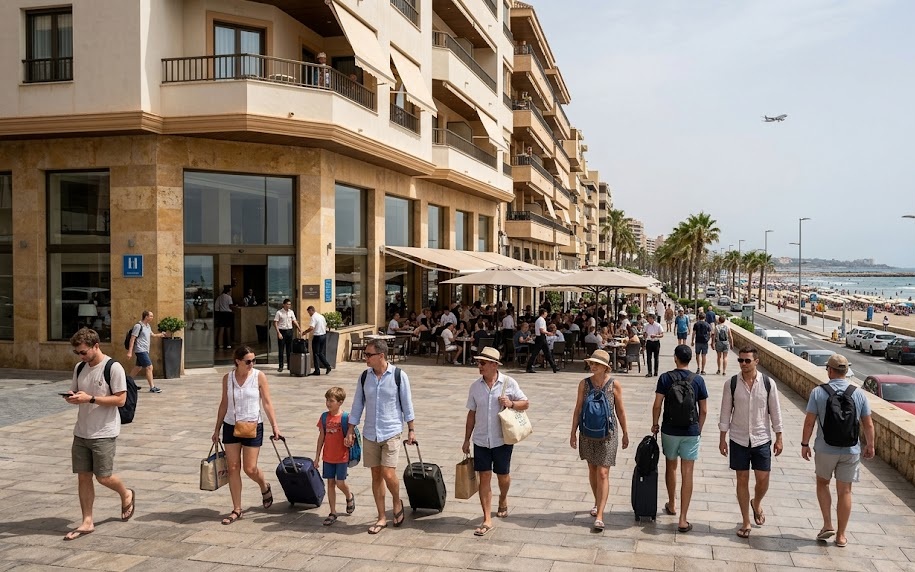
European travel demand remained resilient throughout summer 2026, despite higher prices, aviation disruptions, geopolitical uncertainty and concerns about extreme heat. New travel and booking data shows that Europe continued to attract strong visitor interest, with travellers adapting their choices rather than abandoning their holiday plans.
The European Travel Commission’s (ETC) Wave 25 sentiment survey, published in July, found that 81% of Europeans planned to travel between June and November 2026, four percentage points higher than the same period a year earlier. Separately, ETC’s quarterly Trends & Prospects report showed international tourist arrivals to Europe up 5% year to date, while overnight stays increased 4.8%, while Eurostat recorded a record 1.3 billion nights in EU tourist accommodation in the first half of 2026, up 1.7% year on year. The growth has been resilient rather than explosive, and performance varied considerably by market.
July Becomes a Strong Summer Travel Month
According to RateGain and Sojern, hotel and flight bookings in Europe were higher than in the previous two summers across June, July and August. August recorded the highest booking volume, while July posted the strongest year-on-year increase, with bookings up about 5% compared with July 2025. The data also indicates that travellers continued to prioritise holidays, but increasingly compared prices and adjusted destinations, trip lengths and travel dates.
This resilience is particularly notable because European travellers faced a combination of higher accommodation prices, airline disruption and economic uncertainty. Rather than disappearing, demand shifted toward destinations and experiences that offered a stronger balance between cost, accessibility and perceived value.
Spain Remains a Major Tourism Magnet
Spain continued to play a central role in Europe’s summer tourism market, benefiting from its beaches, cities, cultural attractions and extensive international air connectivity. It accounted for around 11% of flight bookings on RateGain’s platforms between June and August, more than any other European destination market. However, recent accommodation data shows that Spain also experienced some softness in short-term rental demand during parts of the summer.
The broader European picture remains more stable when Spain and Germany are excluded, with AirDNA reporting that those two markets accounted for most of the continent’s summer short-term rental demand decline. This illustrates how overall European tourism performance can vary considerably from one country and accommodation segment to another.
Mediterranean Destinations Continue to Lead
The Southern and Mediterranean regions remained among the most sought-after parts of Europe during the summer. The ETC reported that interest in Southern and Mediterranean Europe for travel between June and November reached 61%, supported by demand for beaches, food, cultural experiences and warm-weather holidays.
At the same time, travellers are becoming more selective about when and where they visit. Concerns about extreme heat and overcrowding are encouraging some visitors to consider September and other shoulder-season periods, rather than concentrating their holidays exclusively in July and August.
The Rise of Shorter European Getaways
One of the clearest changes in traveller behaviour is the growing popularity of shorter trips. Trip.com data released ahead of the season showed that average summer trip durations ranged from approximately 2.9 to 3.8 days, while short-haul flight bookings in Europe increased 73% year on year.
Long weekends and quick city breaks allow travellers to experience destinations without committing to the cost of a lengthy holiday. They also make it easier for people to travel several times during the year, rather than spending their entire annual travel budget on one major trip.
Cooler Destinations Gain Attention
Europe’s summer heat also influenced destination choices. Searches for “coolcations” increased 74% year on year in the first half of 2026, according to Trip.com, with travellers showing greater interest in places such as Iceland, Norway, Slovenia, Switzerland and Wales.
The trend demonstrates that climate is increasingly becoming part of the destination decision. Travellers who might traditionally have chosen a hot Mediterranean beach holiday are also considering mountains, northern European cities, coastal areas and destinations where temperatures are more comfortable during the peak summer months.
Value Becomes More Important
Strong demand does not mean travellers are spending without limits. Affordability and value for money have become increasingly important considerations when Europeans choose destinations.
In ETC’s Travel Industry Monitor survey, 48% of European respondents identified affordability and value for money as a key opportunity for Europe in Q2, up from 32% in Q1. This suggests that destinations offering competitive accommodation, convenient transportation and a strong range of experiences may have an advantage as travellers become more careful with holiday budgets.
Hotel Prices Rise While Demand Holds Up
Higher hotel prices did not prevent European tourism from maintaining momentum. Industry data from RateGain and Sojern indicated that European hotel average daily rates increased approximately 4–6% during summer 2026, while hotel and flight bookings continued to show growth across the season.
However, other accommodation data shows a more mixed picture. AirDNA reported that European short-term rental demand nights declined 2% across summer 2026, while average daily rates increased 7.8%. This suggests that the broader travel market remained active even as individual accommodation segments experienced different demand patterns.
Geopolitics also redirected demand. RateGain data shows European flight volumes to Turkey rose 25% year on year as the conflict in the Middle East continued, while volumes to the rest of the Middle East fell about 13%. Booking windows also shortened, with average flight lead times falling to 33 days in June from 37.5 days in 2025.
Shoulder Season Could Become the Next Growth Opportunity
The changing travel pattern could make September and October increasingly important for European tourism. Travellers are seeking milder temperatures, potentially better value and fewer crowds, while destinations are looking for ways to extend tourism beyond the traditional July-August peak.
Current booking data already points in that direction. AirDNA reported that European demand nights for September through December were 2.3% ahead of the previous year, with September up 2.4% and October up 4.9%.
Key Takeaways
- 81% of Europeans planned to travel between June and November 2026, four percentage points higher than the previous year.
- International tourist arrivals to Europe increased 5% year to date, while overnight stays rose 4.8%.
- Eurostat recorded a record 1.3 billion EU tourist nights in H1 2026, up 1.7%.
- Southern and Mediterranean Europe remained a major focus of travel demand, with interest reaching 61% for the June-November period.
- European short-haul flight bookings increased 73% year on year, reflecting growing demand for shorter breaks.
- Searches for cooler-weather “coolcations” rose 74%, highlighting the growing influence of summer temperatures on destination choices.
- Value for money is becoming more important, with 48% of respondents to ETC’s Travel Industry Monitor identifying affordability and value for money as a key opportunity.
- European hotel ADR rose 4–6% year on year (RateGain/Sojern), while travellers remained active and increasingly adjusted their destination, timing and trip length to manage costs.
- September and October are gaining importance as travellers seek cooler weather, flexibility and potentially better value.
Bottom Line
European travel demand remained resilient through summer 2026, but the way people travelled continued to change. Higher prices and uncertainty encouraged travellers to become more selective, favouring shorter trips, nearby destinations, good value and experiences that matched their budgets and comfort levels. At the same time, the growing popularity of cooler destinations and shoulder-season travel is reshaping Europe’s tourism calendar. The result is a resilient travel market that is not simply growing in volume, but becoming more flexible and responsive to changing traveller priorities.




More Stories
Mexico Sets Tourism Records Through July 2026
Maryland Gains Recognition as Top Destination
Nepal Landslides Disrupt Tourist And Trekking Routes