










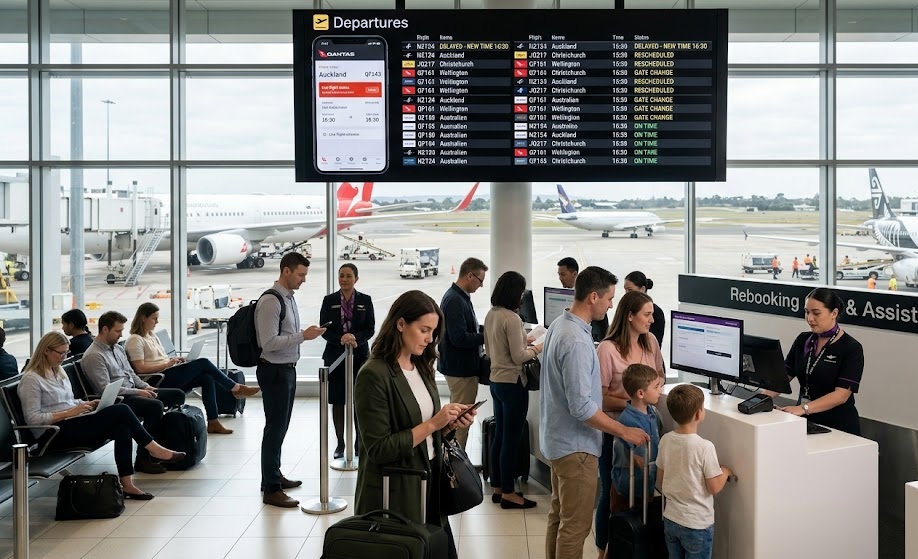
Air travel between Australia and New Zealand has come under renewed pressure, with Qantas, Virgin Australia and Air New Zealand recording 263 delays and 12 cancellations across the trans-Tasman network. As one of the busiest aviation corridors in the region, the route is vital for business, tourism and family travel, meaning even moderate disruptions can quickly impact flight connections, airport operations and passenger schedules.
The latest disruptions follow a series of operational challenges seen throughout July, with previous days also experiencing hundreds of delays and multiple cancellations across major airports including Sydney, Melbourne, Brisbane and Auckland. Ongoing weather conditions, aircraft rotations, crew availability and high winter travel demand have continued to place pressure on airline schedules, making punctual operations increasingly difficult.
The effects are being felt across the travel industry. Passengers face longer airport waits, missed onward connections and unexpected itinerary changes, while airlines must manage aircraft scheduling, crew resources and customer rebookings. Tourism operators and businesses that rely on dependable trans-Tasman services are also experiencing the knock-on effects of continued schedule instability.
Although airlines continue working to restore normal operations, the outlook remains uncertain until operational pressures ease and flight schedules stabilize. Travelers are advised to monitor flight updates before departure, allow extra time at airports and remain prepared for potential delays or last-minute schedule changes during the busy travel season.
Key Takeaways
- Qantas, Virgin Australia and Air New Zealand recorded 263 delays and 12 cancellations across trans-Tasman routes, disrupting travel plans between Australia and New Zealand.
- Major hubs including Sydney, Melbourne, Brisbane and Auckland experienced continued operational pressure during the busy winter travel period.
- Weather, aircraft rotations, crew availability and increased passenger demand have contributed to repeated flight disruptions throughout July.
- Travelers faced missed connections, longer airport waits, itinerary changes and additional rebooking challenges due to ongoing schedule instability.
- Airlines continue working to restore reliable operations while managing network-wide scheduling and customer service demands.
- Passengers are encouraged to check flight status before departure and allow extra travel time as disruptions may continue.



More Stories
Belgians Could Get Faster US Airport Entry By End Of 2026
Flights Cancelled Across Europe As Rome, Catania And More Face Disruption
FAA Fines Unruly Airline Passengers $1.5 Million in 2026