










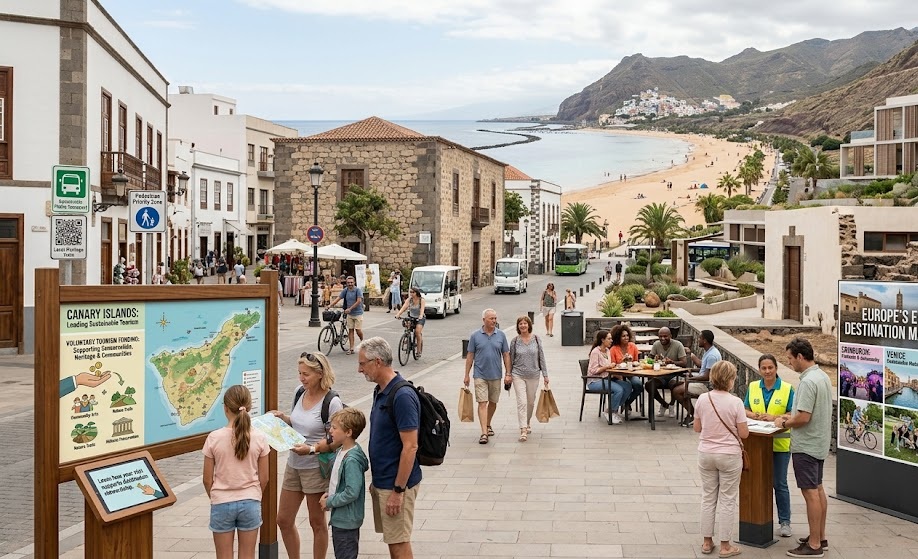
Europe is rewriting the rules on how tourism is funded. Amsterdam has joined Edinburgh, Venice, and more than a dozen other destinations in supporting a voluntary funding model that shifts money for tourism from strict government levies to collaborative, community-focused partnerships. Led by the Canary Islands and backed by the European Union’s Regional and Local Network (REGNEXT) initiative, the new model aims to make tourism funding more sustainable, transparent, and locally accountable.
The Canary Islands have been the most visible driver of this change. They recently launched a voluntary tourism funding scheme that allows local businesses, hotels, and tour operators to contribute directly to projects that improve visitor experiences, reduce environmental impact, and support local infrastructure. The goal: reduce the pressure on public budgets while giving communities more control over how tourism money is used.
Why Amsterdam and Other Cities Are Changing the Game
Amsterdam, Edinburgh, and Venice have all faced intense pressure from overtourism, rising costs, and host community backlash. In each case, traditional tourist taxes have been criticized for being too blunt, too centralized, and not always going back to the people or places that need it most.
By backing the voluntary funding model, these cities are trying to:
- Reduce the burden on public funds by letting tourism businesses and operators fund destination improvements directly
- Increase transparency so contributors can see exactly how their money is being used
- Empower local communities to decide which projects—beaches, bike paths, cultural festivals—should get priority
- Encourage responsible tourism by linking funding to environmental and social goals
The REGNEXT Framework
REGNEXT is the European network that brings together regional and local authorities to share best practices, test new policies, and scale successful models. The voluntary tourism funding model is one of its flagship pilots, and the Canary Islands are acting as the lead region.
Under the framework, participating destinations can:
- Design bespoke funding schemes that fit their local context
- Set clear contribution levels for hotels, tour operators, and other tourism actors
- Track and report on how funds are used, with public dashboards and community feedback
- Link funding to outcomes such as reduced congestion, improved waste management, or better accessibility
What’s Next for Tourists and Hosts?
For travelers, the shift may mean seeing new options at checkout—such as optional contributions to local projects, or marks on accommodation that show how their stay helped fund community initiatives. For hosts, it means more hands-on control over tourism planning and a clearer way to show residents that tourism is a partner, not a burden.
The voluntary model is not yet mandatory, but as more cities join, the pressure on Europe’s traditional tourist tax system will grow. The Canary Islands are betting that if the model works, it will set a new standard for how Europe funds and manages tourism in the years ahead.
Bottom Line:
Amsterdam, Edinburgh, and Venice are joining the Canary Islands in embracing a voluntary tourism funding model backed by REGNEXT, challenging Europe’s traditional tourist tax system. The push aims to make tourism funding more sustainable, transparent, and community-driven, giving local people and businesses more control while reducing pressure on public funds. As more destinations join, this model could reshape how Europe manages and finances tourism in the coming years



More Stories
HVS: U.S. Hotel RevPAR Up Over 10% Mid-September as Nearly 1,000 Hotels Sold in H1 2026
Hyatt’s Luxury Push Across the Americas Centers on Mexico Park Hyatt Trio and Unbound Growth
Hilton Home2 Suites Clean-Energy Blueprint Targets 18–40% Lower Energy Bills for Franchise Owners