










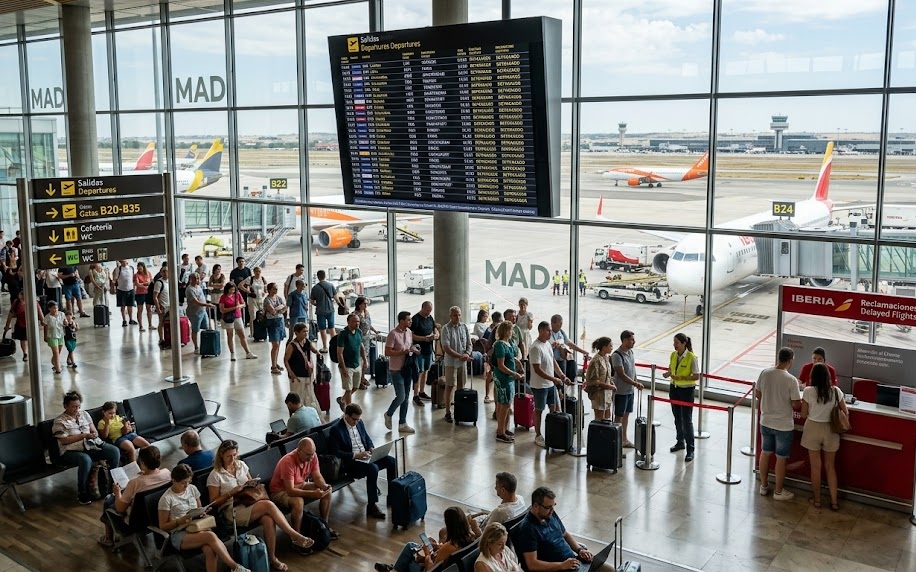
Hundreds of thousands of travelers across Europe experienced major disruption after 2,308 flights were delayed and 86 flights were cancelled, affecting key aviation hubs including Madrid, Paris, Amsterdam, and Frankfurt. The disruption comes during the peak summer travel season, when high passenger volumes make airline networks especially vulnerable to operational challenges. As flights operate on tightly coordinated schedules, even minor delays at major hubs can quickly spread across multiple countries. The latest disruption once again highlights how interconnected Europe’s aviation network has become during periods of heavy travel demand.
The delays were driven by a combination of air traffic control capacity constraints, staffing pressures, and adverse weather, with thunderstorms adding further strain across parts of the European aviation network. Together, these operational challenges created a ripple effect that impacted both domestic and international services, forcing airlines to adjust schedules while working to minimize inconvenience for passengers.
Major Airports Under Pressure
Madrid was among the hardest-hit airports, alongside Paris, Amsterdam, and Frankfurt. As major connecting hubs, delays at these airports quickly spread across the wider network, leading to disrupted aircraft rotations, delayed departures, and missed onward connections. Airlines were required to continuously adjust flight schedules while airport authorities managed increasing passenger volumes. The knock-on effect was felt across numerous routes as aircraft and crews arrived later than planned.
Passengers Face Travel Challenges
The widespread disruption resulted in longer airport waits, missed connections, baggage delays, and last-minute rebookings. Many travelers were forced to change itineraries or spend additional time at airports while waiting for updated departure information. Airlines also worked to reposition aircraft and crews while restoring normal schedules across affected routes. Customer service teams experienced higher demand as passengers sought assistance with alternative travel arrangements and schedule changes.
Travelers flying through busy European airports are advised to check their flight status before leaving for the airport, monitor airline notifications for updates, and allow extra time for security checks, transfers, and connecting flights. Staying informed throughout the journey can help reduce stress and improve flexibility if operational changes occur.
Need for Stronger Operational Resilience
The latest disruption highlights the growing need for greater air traffic control capacity, improved staffing, and stronger operational resilience as Europe continues to experience high passenger demand during the summer travel season. Continued investment in airport infrastructure, digital traffic management systems, and workforce planning will be essential to reduce future delays. Strengthening these areas can help airlines recover more quickly from unexpected disruptions while maintaining smoother passenger journeys across the continent.
Key Takeaways
- Europe recorded 2,308 flight delays and 86 cancellations, affecting thousands of passengers during one of the busiest periods of the summer travel season.
- Madrid, Paris, Amsterdam, and Frankfurt were among the major European airports experiencing widespread operational disruption and schedule changes.
- Air traffic control capacity constraints, staffing shortages, and severe thunderstorms combined to create delays across domestic and international routes.
- Travelers experienced missed connections, longer airport waits, baggage delays, flight rebookings, and changing travel itineraries throughout the disruption.
- Airlines and airports worked to restore schedules while minimizing the impact on passengers and maintaining safe flight operations.
- The disruption reinforces the importance of stronger operational resilience, improved air traffic management, and continued investment in aviation infrastructure across Europe.
Bottom Line
Europe’s latest flight disruption demonstrates how heavy summer travel, air traffic control constraints, staffing pressures, and adverse weather can quickly impact thousands of flights across the continent. While airlines and airports continue working to restore normal operations, the incident highlights the importance of investing in more resilient aviation systems capable of handling growing passenger demand.



More Stories
Belgians Could Get Faster US Airport Entry By End Of 2026
Flights Cancelled Across Europe As Rome, Catania And More Face Disruption
FAA Fines Unruly Airline Passengers $1.5 Million in 2026