








What’s Happening
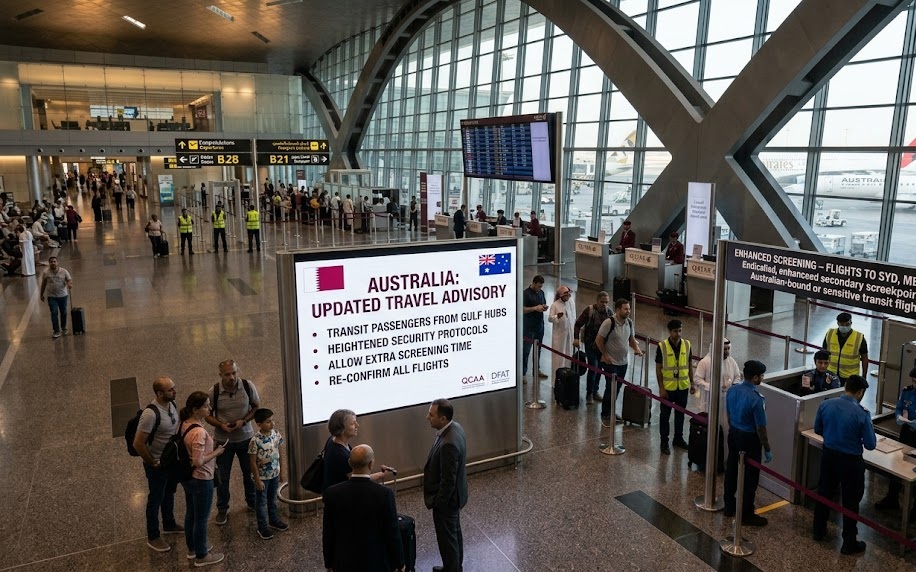
Australia has issued a formal travel warning for Qatar and the United Arab Emirates as a heightened security alert in Doha and renewed Middle East conflict risks have pushed the region back into a high‑threat environment. The alert comes after Doha’s Interior Ministry sent emergency messages urging residents and travelers to “remain indoors” and stay away from windows, citing an “elevated” security threat level and potential missile or drone activity. The UAE’s Ministry of Interior also reported that its air defenses were responding to missile threats, with similar advice to stay in safe places and follow official updates.
Why Gulf Transit Hubs Are Critical
The Gulf’s three major aviation hubs—Dubai (Emirates), Doha (Qatar Airways), and Abu Dhabi (Etihad)—are among the world’s most important transit points for long‑haul travel between Europe, Asia, Africa and the Americas. Millions of passengers rely on these hubs every year, including many Australians traveling to Europe, the Middle East and beyond. When security alerts, airspace closures or attacks occur, flights can be delayed, rerouted or suspended, leaving travelers stranded and forcing airlines to rebook passengers on alternative routes that may be longer, more expensive or less convenient.
Impact on Emirates, Qatar Airways and Etihad Passengers
The latest escalation puts Emirates, Qatar Airways and Etihad Airways passengers on high alert, with several immediate risks:
- Flight disruptions and delays as airlines monitor airspace safety and adjust flight paths.
- Rerouting of flights away from the Gulf, adding travel time and potentially increasing costs.
- Uncertainty for travelers with connections in Dubai, Doha or Abu Dhabi, who may face airport delays, long waits or missed connections.
- Advisory pressure on Australian travelers to review their plans, consider alternative routings, or postpone trips until the security situation stabilizes.
Australian authorities are advising citizens to check airline updates, travel insurance terms and embassy guidance, and to avoid unnecessary travel to high‑risk areas in the Gulf unless absolutely required.
What Travelers Should Do Now
If you are traveling to or through the Gulf:
- Check your flight status regularly on your airline’s website or app.
- Allow extra time at airports and for connections, especially if your journey includes Dubai, Doha or Abu Dhabi.
- Review travel insurance to ensure it covers flight disruptions, delays or cancellations due to security alerts.
- Stay informed through official channels such as the Australian Department of Foreign Affairs and Trade (DFAT), local embassy bulletins, and airline communications.
- Consider alternative routes if you are flexible, especially if you can avoid high‑risk Gulf hubs during periods of heightened tension.
Australia’s warning is a clear signal that the Middle East conflict risks have returned with enough intensity to justify caution for travelers in the region, and that Gulf transit hubs are once again a focal point of global aviation risk.
Key Points
- Australia warns Qatar and UAE travelers as Doha security alert escalates and Middle East conflict risks return.
- Doha’s Interior Ministry issued an “elevated” alert, urging people to remain indoors and stay away from windows.
- UAE air defenses responded to missile threats, with similar advice to stay in safe places and follow official updates.
- Emirates, Qatar Airways and Etihad passengers are on high alert across Dubai, Doha and Abu Dhabi hubs.
- Flight disruptions, delays and rerouting are expected as airlines monitor airspace safety and adjust flight paths.
- Australian travelers are advised to check flight status, review insurance, allow extra time and consider alternative routes.
Bottom Line
Australia has issued a travel warning for Qatar and the UAE as a heightened security alert in Doha and renewed Middle East conflict risks have pushed the Gulf back into a high‑threat environment. The alert affects Emirates, Qatar Airways and Etihad passengers using Dubai, Doha and Abu Dhabi as key transit hubs, with flights at risk of delays, rerouting and disruptions. Australian travelers are advised to check flight status, review insurance, allow extra time for connections and consider alternative routes until the security situation stabilizes.



More Stories
Nepal Landslides Disrupt Tourist And Trekking Routes
Italy And Germany Help France Target Record Tourism Revenue
US, Canada And Mexico Reveal A Tourism Spending Divide