










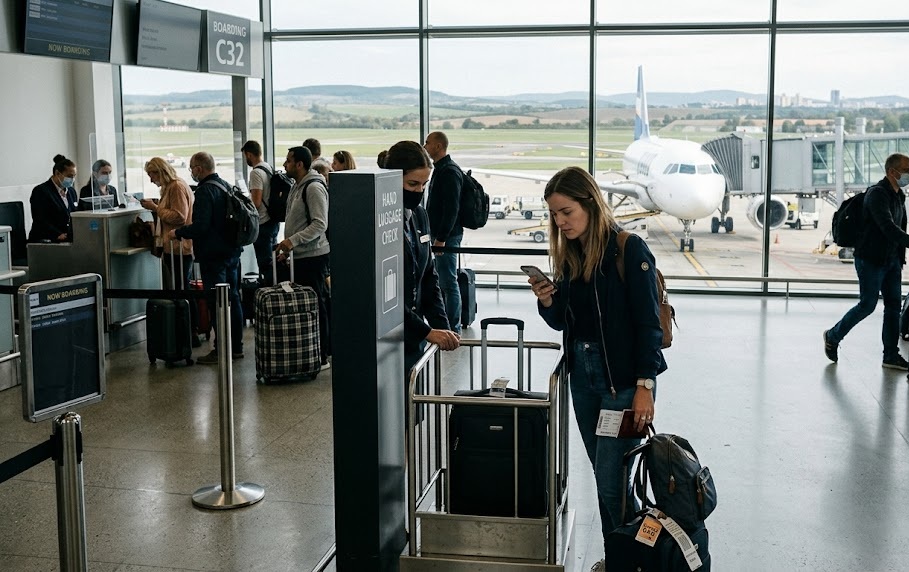
A €50 flight across Europe can look like an incredible bargain, but the advertised fare is often only the starting point. Once passengers add baggage, seat selection, airport transfers, meals, priority boarding, and other extras, the final cost of a supposedly cheap trip can climb dramatically. For travelers planning European holidays, understanding these additional costs can make the difference between a genuine bargain and an unexpectedly expensive journey.
The issue is particularly relevant as budget airlines continue to dominate short-haul European travel, offering extremely low headline fares to attract passengers. While these prices can be excellent for flexible travelers carrying little luggage, the total cost can become much higher when travelers select services they actually need.
The €50 Fare Is Rarely the Final Price
Budget airlines typically advertise their lowest available base fare, which may cover little more than the passenger’s basic transportation from one airport to another. Travelers may then encounter additional charges as they progress through the booking process.
Common extras include:
- Checked baggage
- Larger cabin baggage
- Seat selection
- Priority boarding
- Airport check-in
- Food and drinks
- Flight changes
- Travel insurance
- Airport transfers
A traveler who starts with a €50 fare can therefore find the final booking approaching €100, €150, or even €200, depending on how many extras are added.
Baggage Can Become the Biggest Extra Cost
Luggage is one of the most important expenses to check before booking a low-cost flight. Airlines often include only a small personal item within the basic fare, while larger cabin bags and checked luggage may require additional payment.
For travelers taking longer holidays, packing for multiple days can make the cheapest fare considerably less attractive. Families traveling together can face an even larger increase because baggage fees may apply separately to several passengers.
The best strategy is to check exactly what baggage allowance is included before comparing fares rather than judging airlines solely by the advertised ticket price.
Seat Selection Can Quickly Add Up
Passengers who want to sit together may also need to pay for seat selection. This can become particularly important for families, couples, and groups, especially when traveling on busy routes.
Although selecting a seat may appear to be a small additional expense, multiple passengers booking together can turn several small charges into a significant addition to the overall trip cost.
Travelers who are willing to accept an automatically assigned seat may avoid this expense, but those with specific seating requirements should include the cost when comparing flights.
Cheap Airport, Expensive Journey
Another common mistake is focusing only on the flight price while ignoring where the airport is located.
Some low-cost carriers operate from airports farther away from major city centers. A €50 flight may therefore require a relatively expensive bus, train, taxi, or private transfer to reach the final destination.
When comparing two flights, travelers should calculate the complete door-to-door journey, including transportation to and from the airport. A slightly more expensive ticket from a centrally located airport can sometimes produce a cheaper overall trip.
Extra Fees Can Turn a Bargain Into a €200 Trip
The real cost becomes clearer when all expenses are added together. A simplified example could look like this:
| Expense | Approximate Cost |
| Base flight | €50 |
| Cabin/checked baggage | €40–€70 |
| Seat selection | €10–€25 |
| Airport transfer | €15–€40 |
| Food and other extras | €10–€20 |
| Potential total | €125–€205 |
The exact amount varies significantly by airline, route, travel date, baggage requirements, and passenger choices. However, the example demonstrates how a very low headline fare can become a much larger travel expense.
The Smart Way to Compare European Flights
Travelers should compare flights based on the final price rather than the advertised fare.
Before purchasing, check:
- What baggage is included?
- Is seat selection necessary?
- Which airport does the airline use?
- How much will transportation to the city cost?
- Are there check-in or booking fees?
- What happens if travel plans change?
- What is the final price after all required extras?
This approach makes it easier to identify genuinely affordable flights and avoid unpleasant surprises at checkout or at the airport.
Budget Travel Still Has Major Advantages
Despite the additional fees, low-cost airlines remain an important part of Europe’s travel system. They have made short-haul international travel more accessible, allowing travelers to visit multiple countries at relatively low prices.
The key is understanding the pricing model. A €50 fare can still be an excellent deal for a traveler carrying only a small bag and avoiding optional extras. The problem arises when passengers assume that the headline price represents the total cost of the journey.
Key Takeaways
- A €50 European flight can cost €125–€200 or more once baggage, seats, transfers, and other expenses are included.
- Baggage charges are often one of the biggest additional costs, particularly for longer holidays and families.
- Seat-selection fees can quickly multiply when several passengers travel together.
- Travelers should consider airport location and transfer costs, not just the flight fare.
- The cheapest advertised ticket is not always the cheapest complete journey.
- Comparing the final checkout price is the best way to identify a genuine airfare bargain.
- Budget airlines can still offer excellent value, particularly for flexible travelers with minimal luggage.
Bottom Line
Europe’s €50 flight deals can be genuine bargains—but only when travelers understand what is included and what comes at an additional cost. Baggage, seat selection, airport transfers, and other extras can quickly transform a €50 ticket into a trip costing €150–€200 or more. The smartest approach is to look beyond the headline fare and calculate the full door-to-door travel cost before booking, ensuring that a seemingly cheap flight actually delivers the value travelers expect.



More Stories
Belgians Could Get Faster US Airport Entry By End Of 2026
Flights Cancelled Across Europe As Rome, Catania And More Face Disruption
FAA Fines Unruly Airline Passengers $1.5 Million in 2026